
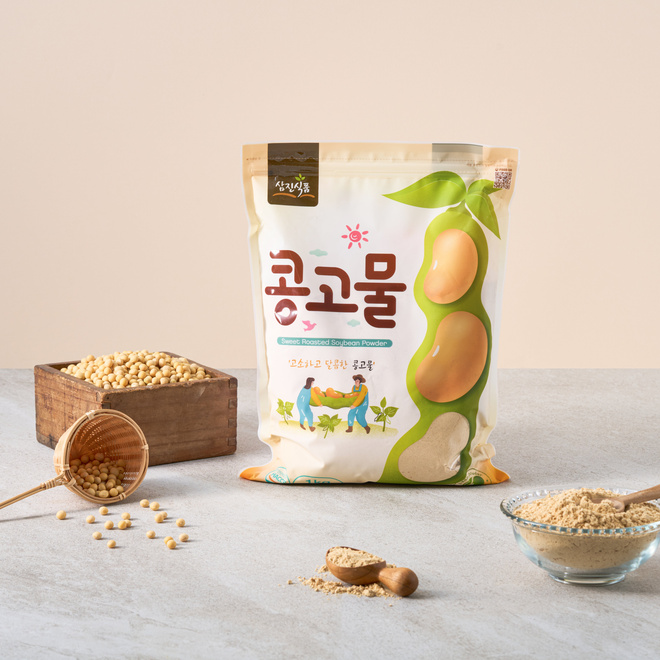
Samjin food · Seongju, Korea
Rice cake coating powder, by the kilo
The rice cake coating powder Korean kitchens call kongomul, in the 1 kg pack. Sweet roasted soybean powder, made for rice cake shops, bakeries and kitchens that go through it steadily. We roast the whole bean at our own plant in Korea and mill it straight after — not months earlier, somewhere else.
What is rice cake coating powder?
DefinitionKorean rice cakes are sticky, so they are rolled in a dry powder before serving. That rice cake coating powder is called kongomul — soybeans roasted whole, milled fine, then blended with a little sugar and salt. It is closest to Japanese kinako, with two differences: the roast is taken further, and the seasoning is already in the bag. Without the sugar and salt it would be plain roasted soybean powder. You do not mix anything. Open it, and dust it on.
Samjin food has roasted and milled grains and beans in Seongju, Gyeongsangbuk-do since 1983.
Every stage runs in our own plant, from intake to packing.

SINCE 1983 · SEONGJU, KOREA
Four things worth knowing
Check pointNutrition figures below are taken from the product label; the rest describe how the product is made and packed.
Both happen on the same line, on the same day. Aroma starts fading the moment a bean is milled.
From the soybean itself. No isolate or concentrate is added.
The whole bean is roasted and milled, hull included.
A 500 g retail pack is also produced, sixteen to a case.
What goes in
IngredientsThree ingredients, and one process decision that matters more than any of them.
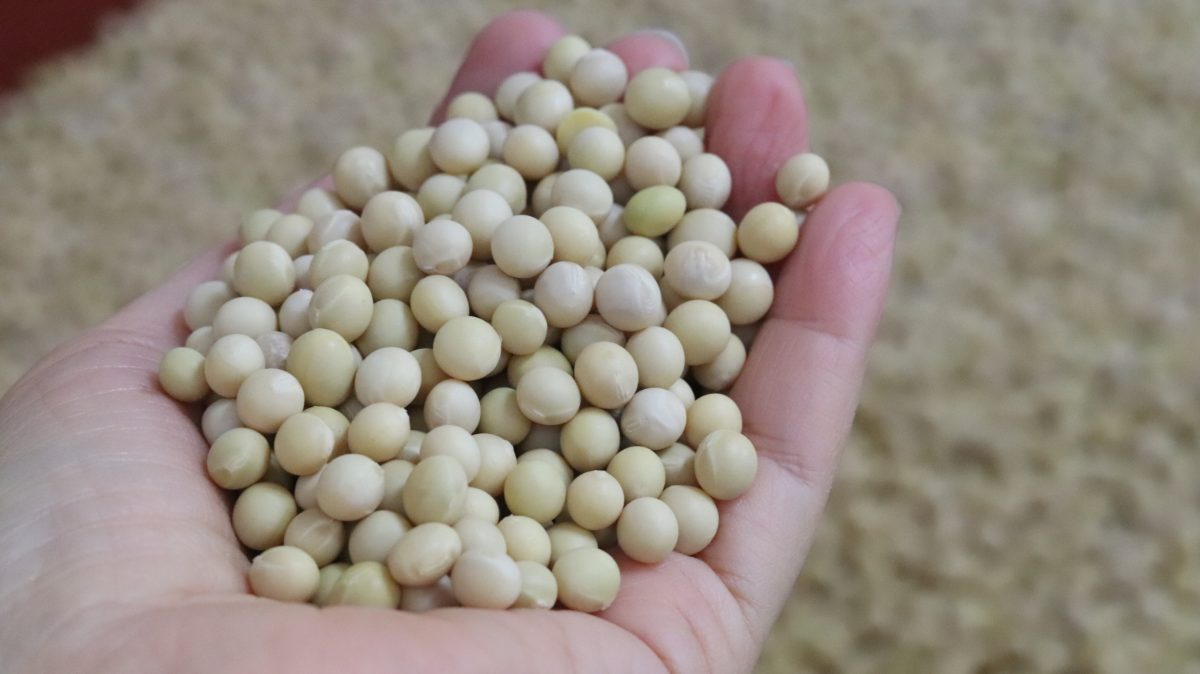
Raw beans as they arrive, before roasting.
Whole soybean
We buy raw beans, not pre-roasted ones. They are roasted in the shell and milled with the hull left in, which is where the fibre and the body of the powder come from. Hulling first would give a paler, softer powder and lose most of what makes kongomul worth eating.
Sugar and salt
Seasoning is already in the bag, in the proportion Korean households use. The salt is roasted salt, a Korean type made by heating sea salt to a high temperature. It rounds the sweetness rather than making the powder taste salty.
INGREDIENT STATEMENT — in order of quantity
Ingredient ratios are not disclosed. Full origin declarations are printed on the pack and are available on the specification sheet on request.
How it is made
ProcessA rice cake coating powder lives or dies on the roast. Too light and it tastes of raw bean; too dark and it turns bitter on the rice cake.
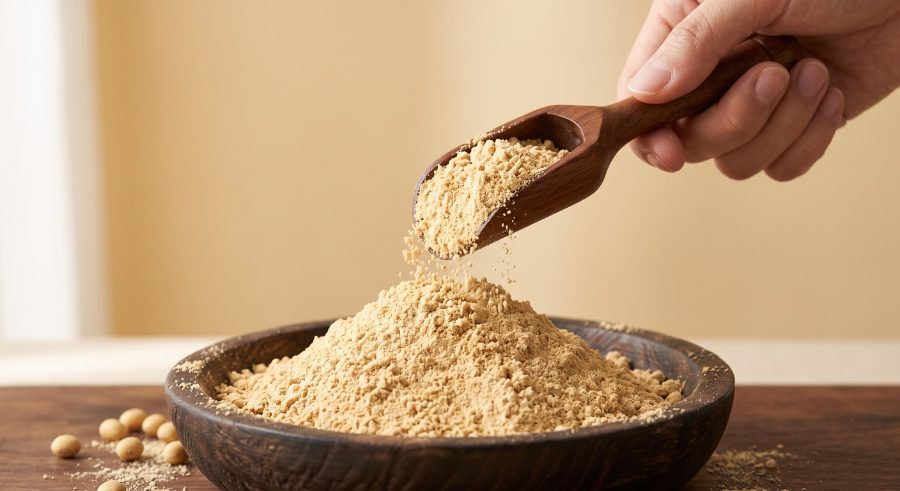
We roast in electric cauldrons and hold the roasting condition for each production run rather than working to a single fixed setting. Beans vary by harvest, and the roast has to follow them. After milling, sugar and salt are blended in — not sprinkled on afterwards — so the seasoning is even through the bag rather than concentrated in whatever you scoop first.
Where the roasting happens
Roasted bean loses aroma steadily from the moment it is milled. That is why the gap between roasting and milling matters.
We buy raw beans and do both steps ourselves. Roasting and milling run on the same line on the same day, at our plant in Seongju.
Nutrition, honestly
NutritionWhat stands out, and what to know before buying.
What stands out
Per 100 g. The protein and fibre are what the soybean brings; nothing is added to raise either figure.
What to know
Per 100 g. This is a seasoned product, so sugar and salt are in it by design. If you would rather season it yourself, our unsweetened roasted soybean powder is the same bean without either.
| Energy | 405 kcal |
|---|---|
| Carbohydrate | 47 g |
| Sugars | 21 g |
| Dietary fibre | 25 g |
| Protein | 27 g |
| Fat | 18 g |
| Saturated fat | 3 g |
| Trans fat | 0 g |
| Cholesterol | 0 mg |
| Sodium | 169 mg |
| Calcium | 142 mg |
| Iron | 6 mg |
| Potassium | 1,461 mg |
| Vitamin D | 0 µg |
All values per 100 g, as declared on the product label. Figures are given as absolute amounts; daily value percentages are omitted because reference intakes differ between countries.
What it tastes like
TasteDeeply roasted and nutty, closer to toasted sesame than to raw bean. It is sweet — this is a seasoned coating, not a plain flour, and the sugar is there so the powder works straight from the bag. The salt sits underneath and keeps the sweetness from going flat. On a warm rice cake the powder softens slightly and the roast comes forward. Texture is fine but not powdery-smooth; the hull is still in there, and you can feel it.
How to use it
How toNo mixing, no cooking. It is finished as it comes.
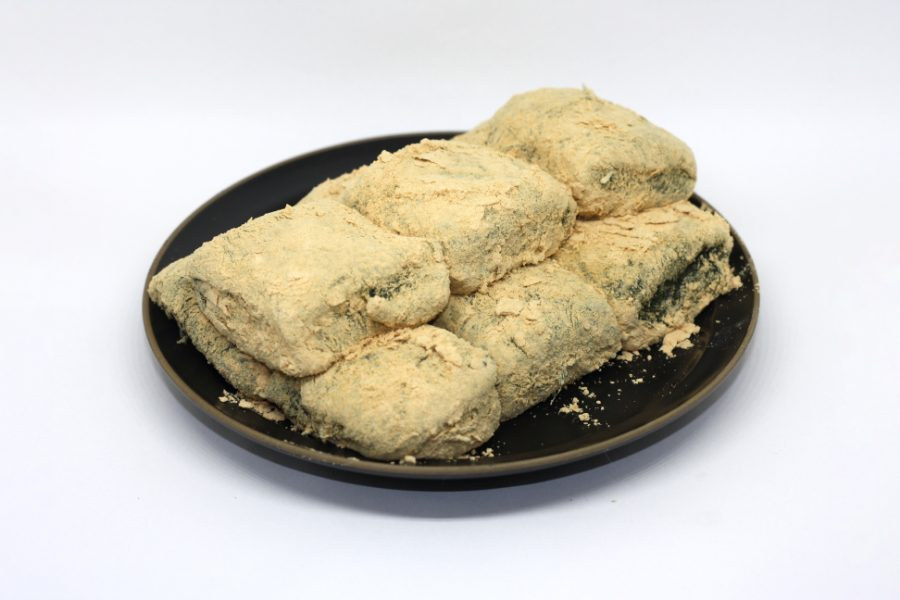
Injeolmi rolled in kongomul, the use it was made for.
Already seasoned. Nothing to add.
A shallow, even layer works best.
Turn it until every side is coated.
Best while the rice cake is still warm.
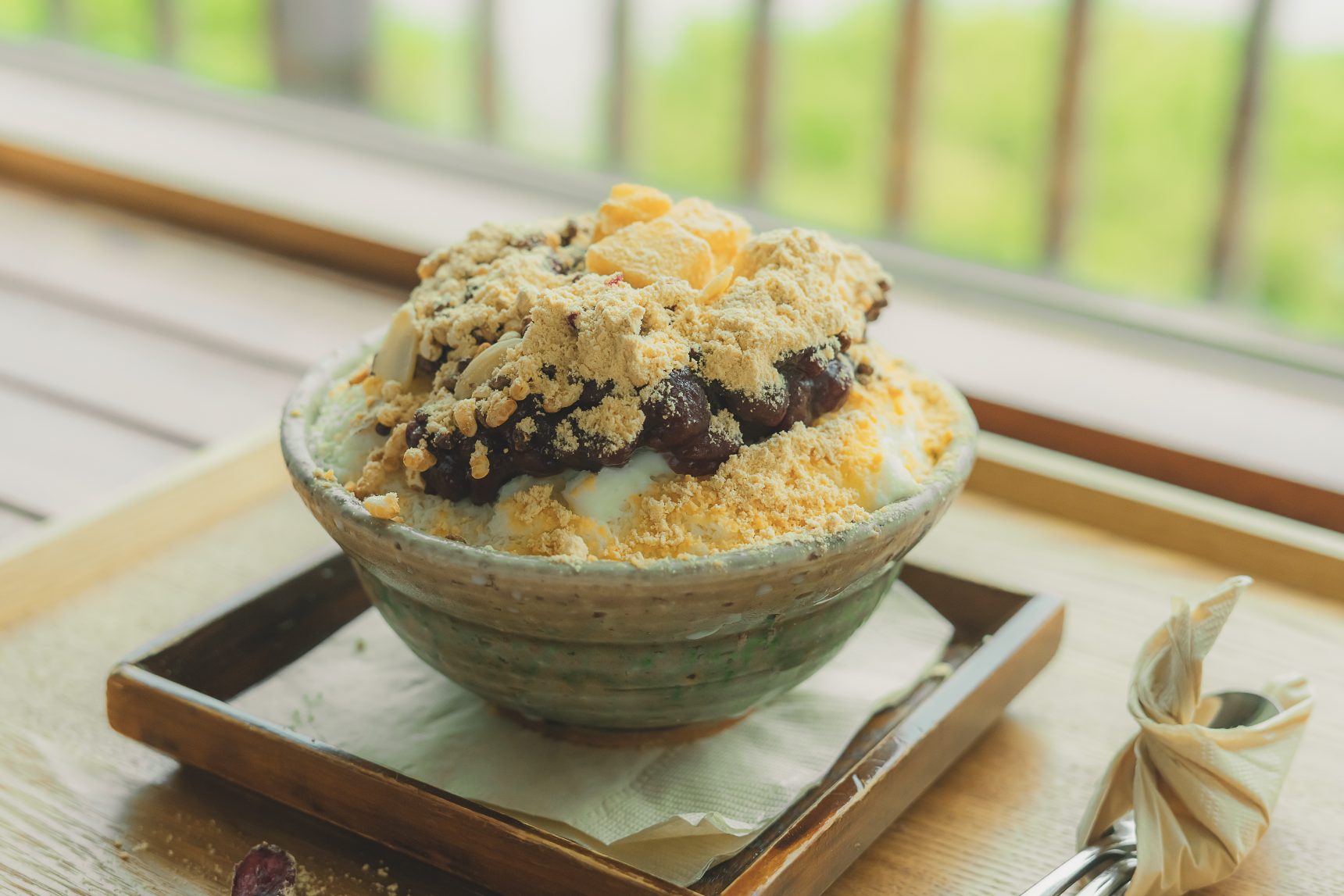
Injeolmi bingsu — shaved ice under red bean, rice cake and a heavy dusting of the powder.
The use it was made for. Rice cake is cut into cubes and rolled in the powder just before serving, so the coating stays dry. At 1 kg the pack lasts a working day rather than a batch.
Injeolmi bingsu is the Korean version — shaved ice with condensed milk, red bean and rice cake, finished with the powder. The roast holds up against cold and sweetness better than a plain flour would.
Folded into doughs and creams, dusted over frozen desserts, or used as a finishing powder. This rice cake coating powder behaves like a seasoned nut powder, so it works anywhere a roasted bean or ground sesame powder would.
Certification
Certification
Certified for processed pulse products. Korean food safety management certification issued by the Ministry of Food and Drug Safety.

Food safety system certification recognised by the Global Food Safety Initiative, held at plant level.

Our plant is registered as a food facility with the US Food and Drug Administration. Registration is a filing requirement for food shipped to the United States and does not constitute FDA approval or endorsement of the product.
Who makes it
ManufacturerFounded in Daegu as Yudong Food, moved to the current plant in Seongju in 1998.
Intake, sorting, roasting, milling, blending, metal detection and packing all run in house, which is why roast and particle size can be adjusted to order.
The same lines supply soybean and grain powders to rice cake producers, bakeries and food manufacturers. OEM and ODM production is available.

Frequently asked questions
FAQHow is this different from kinako?
Both are roasted soybean powder. Kongomul is roasted further, which gives a darker colour and a stronger nutty flavour, and it comes already blended with sugar and salt. Kinako is usually unsweetened, so it is seasoned at the point of use. If a recipe calls for kinako plus sugar, this is close to that already mixed.
Does it contain allergens?
Yes. This product contains soy. It is manufactured in a facility that also handles sesame, peanut and wheat products.
Is there an unsweetened version?
Yes. Our roasted soybean powder is the same bean roasted and milled without sugar or salt, for buyers who season their own formulation. It is available in 500 g and 1 kg.
Can I use it as a drink powder?
You can stir it into milk, and some people do. It is formulated as a coating rather than a beverage, so it does not dissolve completely and will settle. For drinking, our mixed grain powders are made for that purpose.
What is the difference between the 1 kg and the 500 g pack?
Pack size and case configuration. The 1 kg pack ships ten to a case and is intended for kitchens and shops; the 500 g pack ships sixteen to a case and is the retail size. Ingredient sourcing differs between the two, and the declarations are printed on each pack.
What makes this different from other soybean powders?
Where the roasting happens. We buy raw beans and do both steps at our own plant, milling straight after the roast rather than importing finished powder. Origin declarations for each ingredient are printed on the pack and available on the specification sheet.
Do you supply this in bulk or under private label?
Yes. We export to the United States, Canada, Australia, Hong Kong and China, and we produce under OEM and ODM arrangements. Roast level and particle size can be adjusted to your specification.
Specification
Product data| Product name | Sweet Roasted Soybean Powder (kongomul) |
|---|---|
| Product type | Processed pulse product |
| Net weight | 1 kg (2.2 lb) |
| Ingredients | Soybean, sugar (sugar, starch), roasted salt |
| Allergen | Contains soy |
| Storage | Store in a cool, dry place away from direct sunlight. Keep sealed after opening. |
| Manufacturer | Samjin food, 31 Yongjeonggongdan-gil, Yongam-myeon, Seongju-gun, Gyeongsangbuk-do, Republic of Korea |
| Country of origin | Republic of Korea |
ALLERGEN INFORMATION — This product contains soy. It is manufactured in a facility that also processes sesame, peanut and wheat.
Also available in other packs
The 500 g retail pack of the same product, and the unsweetened version for kitchens that season their own.
