Samjin food · Since 1983
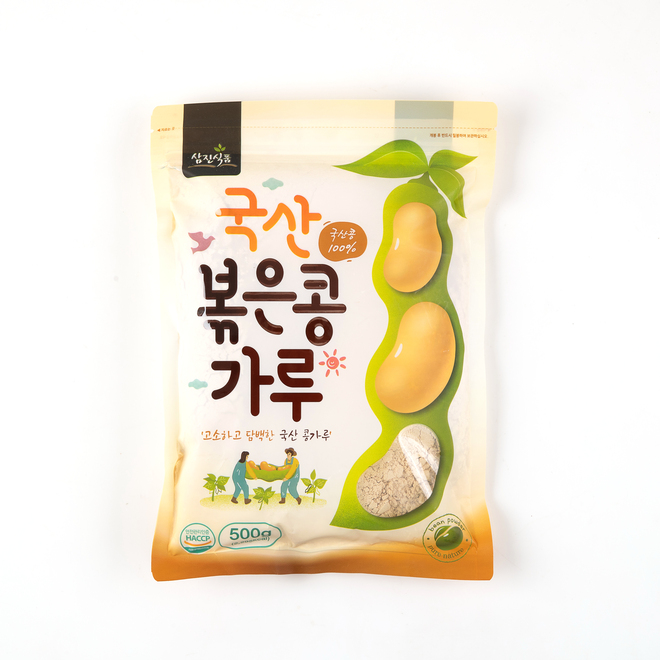
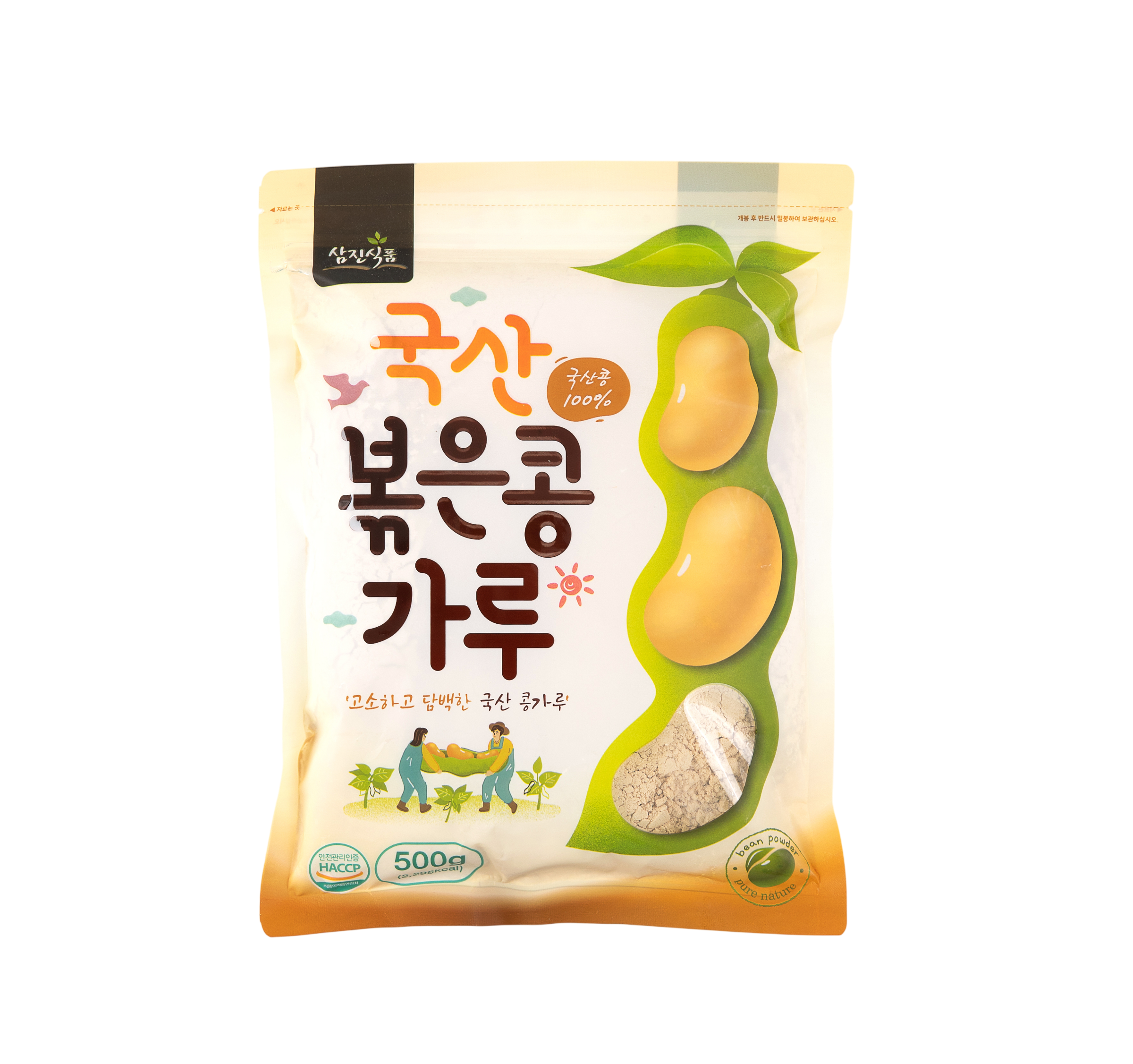
Roasted Soybean Powder500g / 17.6 oz
Made from soybeans grown in Korea, roasted and finely milled. No sugar, no salt, nothing else added.
About
Roasted soybean powder made from one ingredient
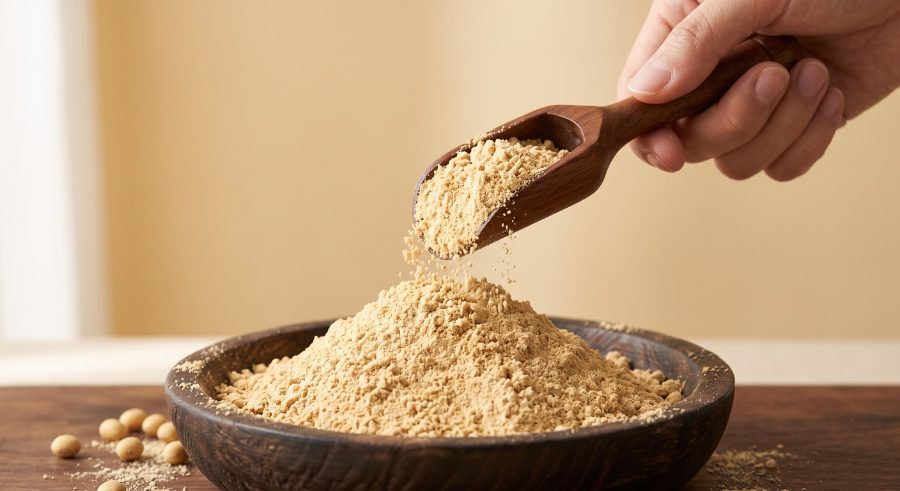
Yellow soybeans are roasted whole in a kettle, then ground into a fine golden powder. The ingredient line reads simply: soybeans, 100%. There is no sugar, no salt, no flavouring and no preservative, so what you taste is the bean itself. In Japan this ingredient is called kinako; in Korea it is bokkeun kong-garu.
Because nothing is seasoned, the seasoning is left to you. Sweeten it with honey or sugar, or leave it plain — either way works only when the ingredient list is this short.
Origin
Grown in Korea, milled in Korea
Every soybean in this pouch is grown in Korea. Beans are sourced from domestic farms and brought to our own plant in Seongju, Gyeongsangbuk-do, where sorting, roasting, milling and packing all happen under one roof. Nothing is blended in from abroad, which is why the front of the pack states 100% Korean soybeans without qualification.
With a single-ingredient food, where that one ingredient comes from is the whole of its quality. This size exists for buyers who choose by origin.
Roasting
Kettle-roasted, the traditional way
The beans are roasted in electric kettles — the old Korean method of pan-roasting in a cauldron, with the heat source switched to electricity. Beans touch the kettle surface directly, which is where the toasty aroma comes from, while steady electric heat keeps them evenly roasted rather than scorched. They are milled in the same facility before they cool. The shorter the gap between roasting and milling, the less aroma is lost.
Nutrition
34g protein, 2mg sodium
34g
Protein per 100g — roughly a third of its weight
2mg
Sodium per 100g — the number you get when no salt goes in
The 8g of sugars on the label is not added sugar. It occurs naturally in the beans. When nothing is put in, the numbers simply describe the ingredient.
* Values from the product nutrition label, per 100g.
How to Use
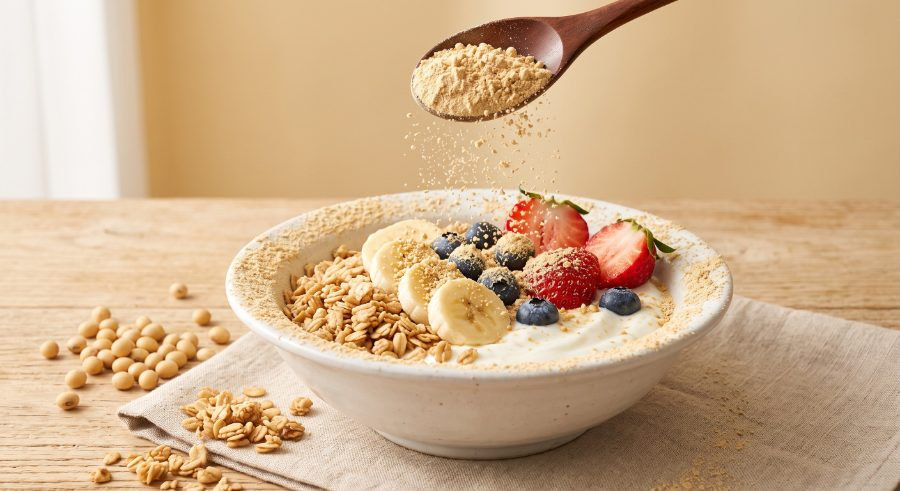
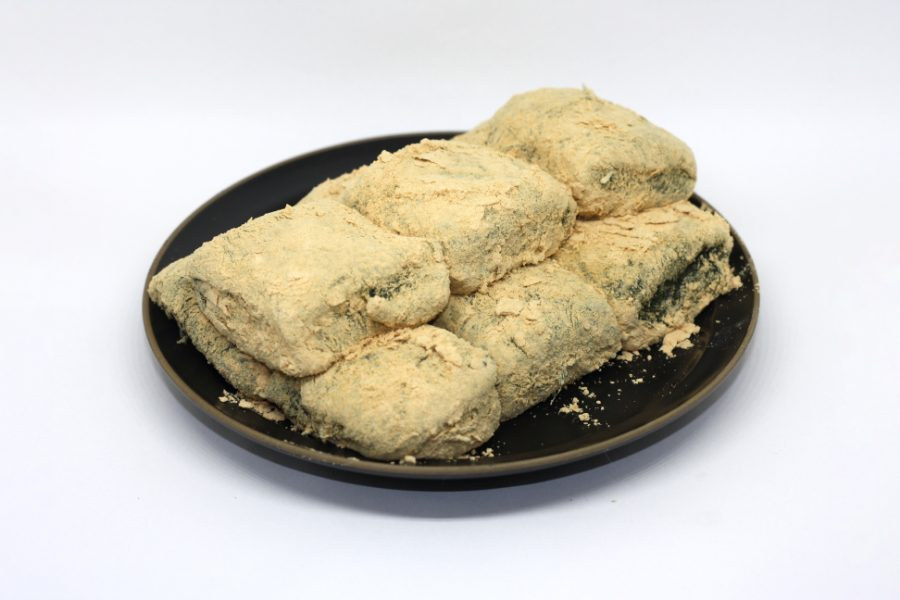
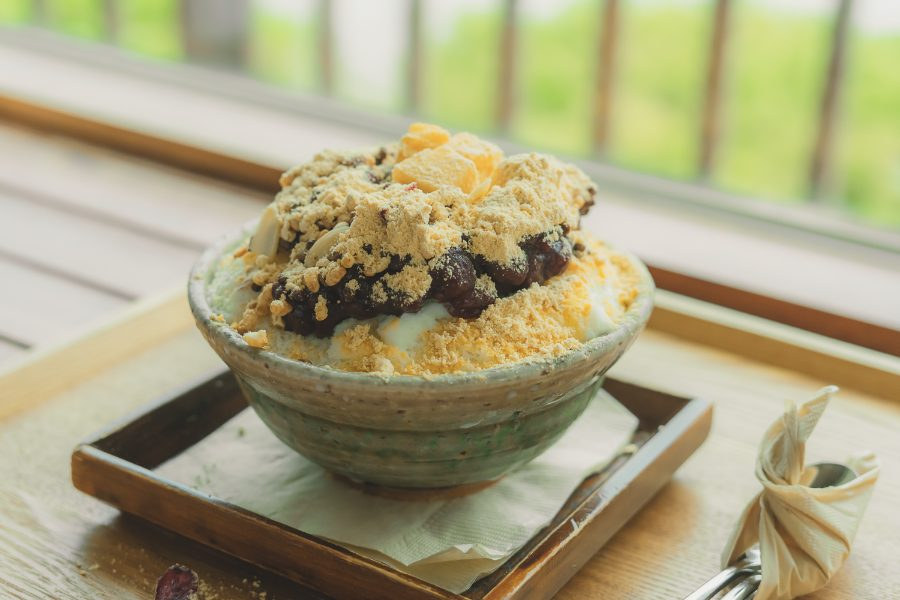
Four ways to use roasted soybean powder
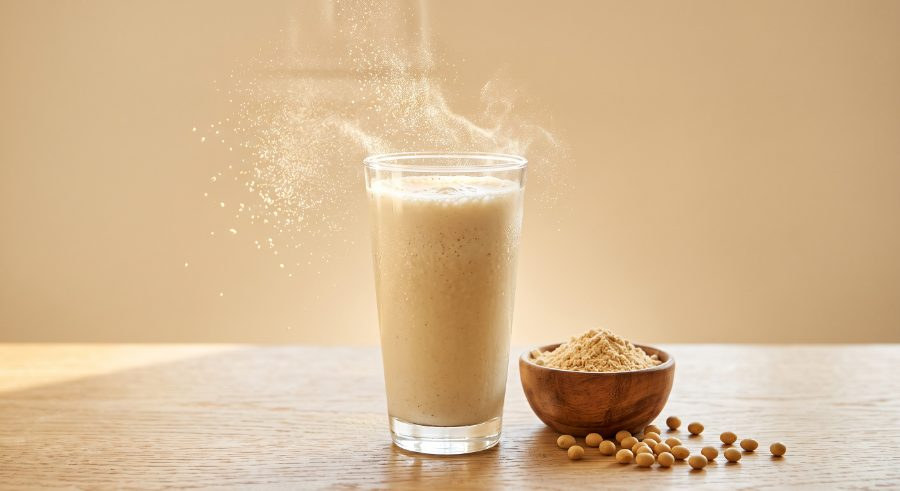
No cooking required — stir it in or dust it over. Press the zipper closed after opening and the aroma keeps until next time.
Check
Roasted soybean powder is not raw soybean flour
This product is fully roasted and ready to eat as it is. Raw (uncooked) soybean flour is a separate ingredient, used in Korean noodle doughs and in cabbage soup, and it must be cooked — if that is what a recipe calls for, look for raw soybean flour instead. For rice cake coatings, drinks and toppings, where nothing will be cooked afterwards, this roasted version is the one you want.
Certification
Made in a certified facility

HACCP
ISO 22000

FSSC 22000
Century Craftsman

China GACC

FDA Registered
Process
Seven steps to the pouch
Milled to 140 mesh, passed twice through 11,000-gauss magnet bars, then checked once more by metal detector.
01
Sorting
02
Washing
03
Kettle roasting
04
Milling (140 mesh)
05
Magnet bars ×2
06
Metal detection
07
Zipper pouch
FAQ
Frequently asked questions
Q. Is this the same as kinako?
A. Yes. Kinako is the Japanese name for roasted soybean flour. This is the Korean version, made from 100% roasted soybeans with nothing added, so it works in any recipe calling for kinako.
Q. Is it raw or roasted?
A. Fully roasted. Raw soybean flour is a different ingredient that needs cooking; this one is ready to eat straight from the pouch.
Q. How is it different from sweetened soybean powder?
A. Sweetened versions have sugar and salt mixed in. This is soybeans only, unseasoned, so you can sweeten it yourself and use it the same way.
Q. How should I store it?
A. Room temperature before opening, away from direct sunlight. After opening, press the zipper closed and refrigerate to keep the aroma.
Q. Does it contain allergens?
A. It contains soybeans. It is made in a facility that also processes milk, buckwheat, peanuts and wheat.
Q. Can I see the test reports?
A. Self-inspection test reports are published in our resource library and open to anyone. samjinfoods.com/pds