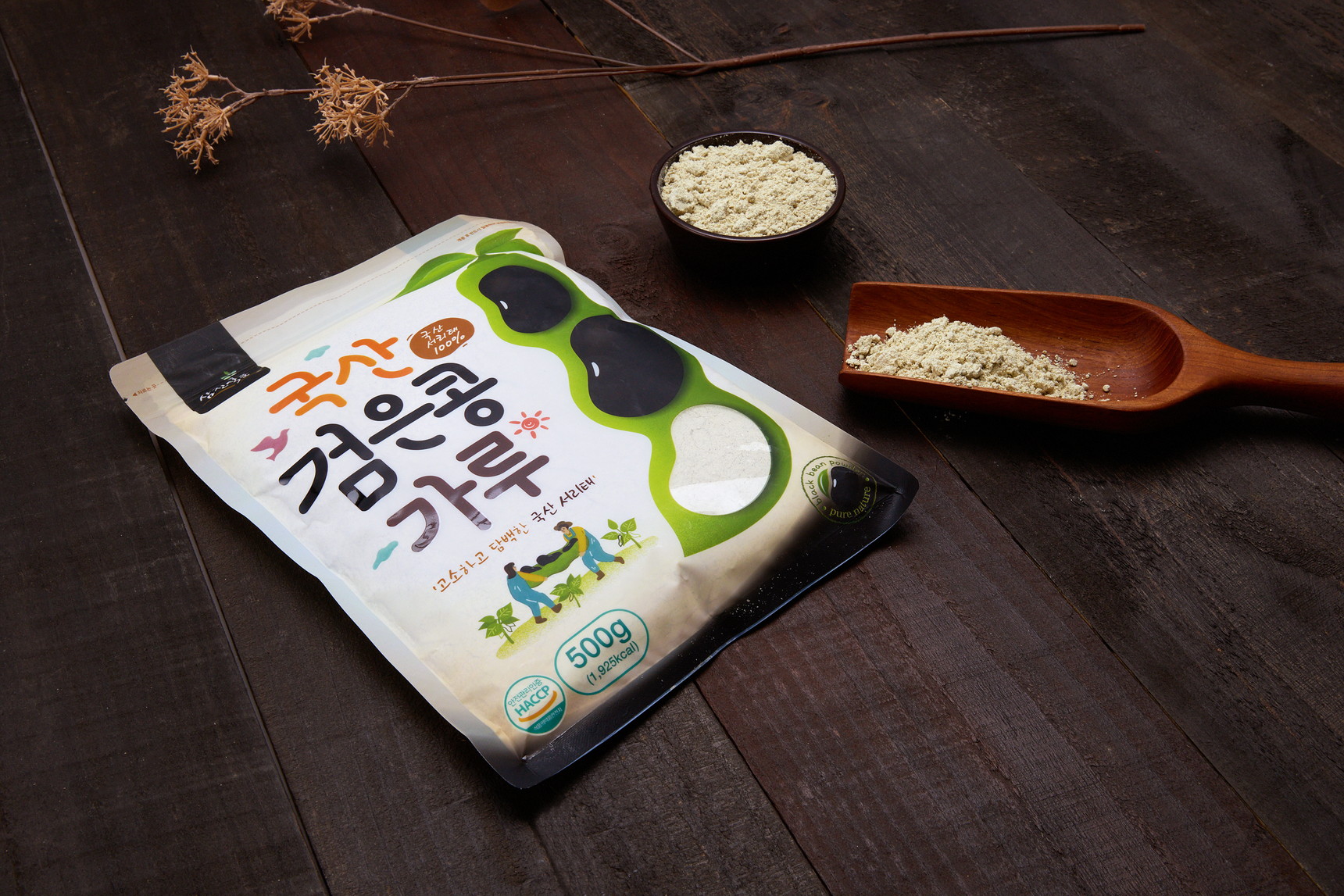
Black Bean Powder
[500g/17.64oz]

삼진식품 국산 검은콩가루 500g
Korean black bean powder 500g pouch with a bowl of powder and a wooden scoop on dark wood

Roasted Soybean Flour

Korean Black
Bean Powder

500g (17.6 oz) · 100% seoritae black beans,
roasted in-house and micro-milled in Seongju since 1983

100% black beans Roasted in-house HACCP certified

What Is Korean Black Bean Powder?

Korean black bean powder — known in Korea as konggaru (콩가루) — is a roasted soybean powder made by toasting whole seoritae black beans and milling them into a fine, nutty flour, used for coating rice cakes, baking, and dusting desserts.

It's the black bean powder Korean kitchens have used for generations — the coating on injeolmi, the dust on bingsu, the nutty swirl in a latte. If you've heard it called bokkeun konggaru — "roasted bean powder" — that's this.
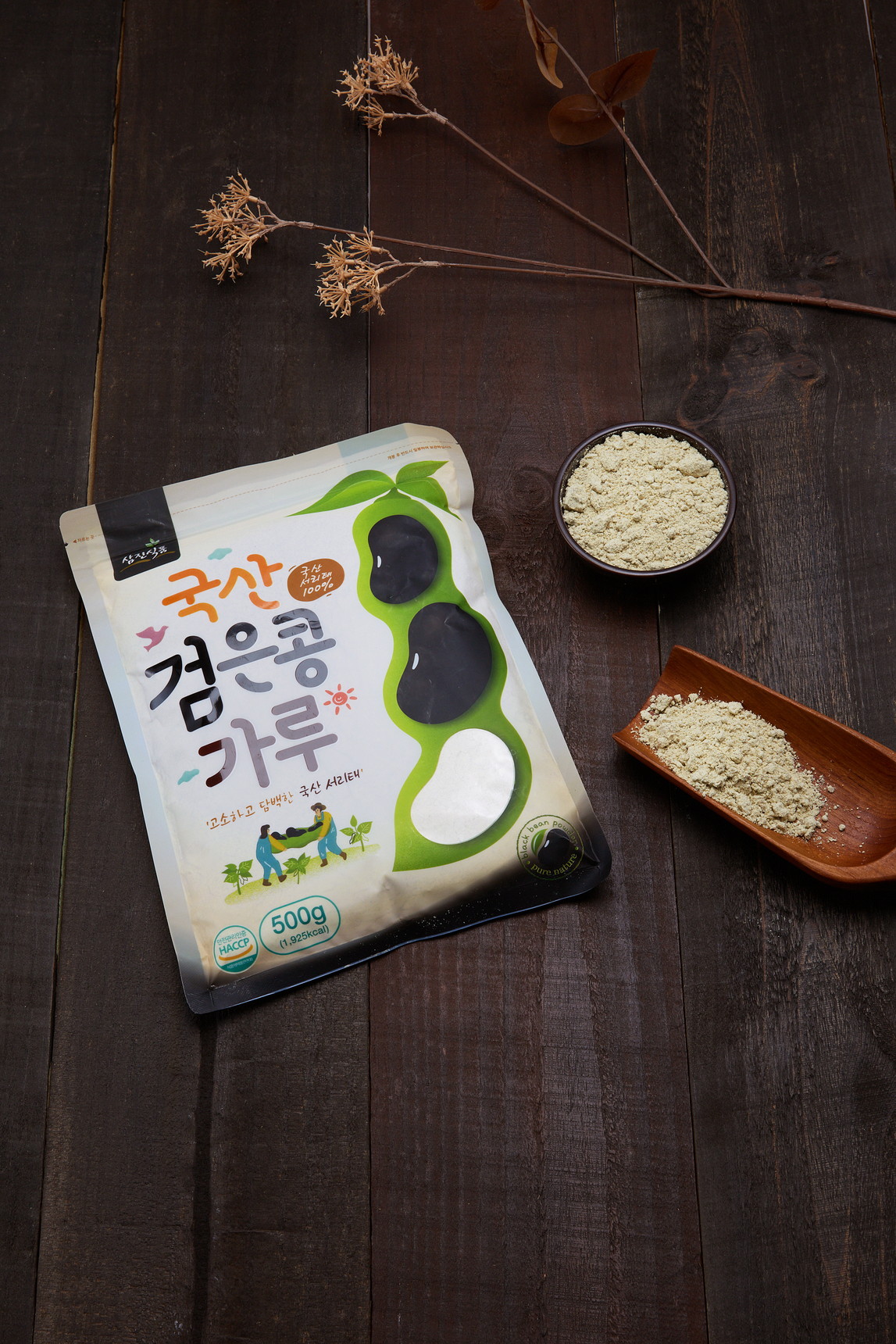
#konggaru #kinako #injeolmi #bingsu
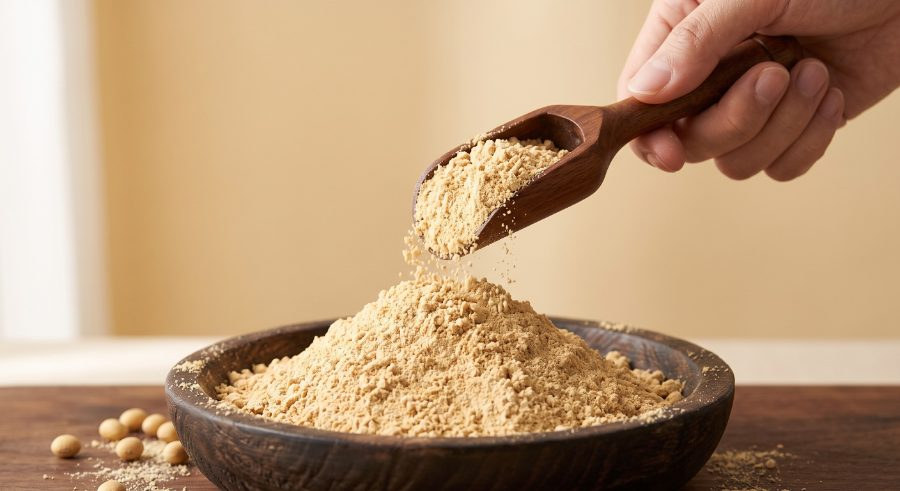
black bean powder in a wooden scoop beside the 500g pouch

Black Bean Powder vs. Kinako

Kinako is Japan's roasted soybean flour; konggaru is Korea's. Made the same way — whole soybeans, roasted, then milled — so they're interchangeable. This one is the black soybean kinako of Korea: 100% seoritae instead of yellow soybeans, for a deeper, roastier flavor.
Kinako (Japan)This powder (Korea)
BeanYellow soybean (typically)100% seoritae black soybean
RoastVariesLow-temperature, in-house
UseMochi, dango, lattesInjeolmi, bingsu, baking, lattes
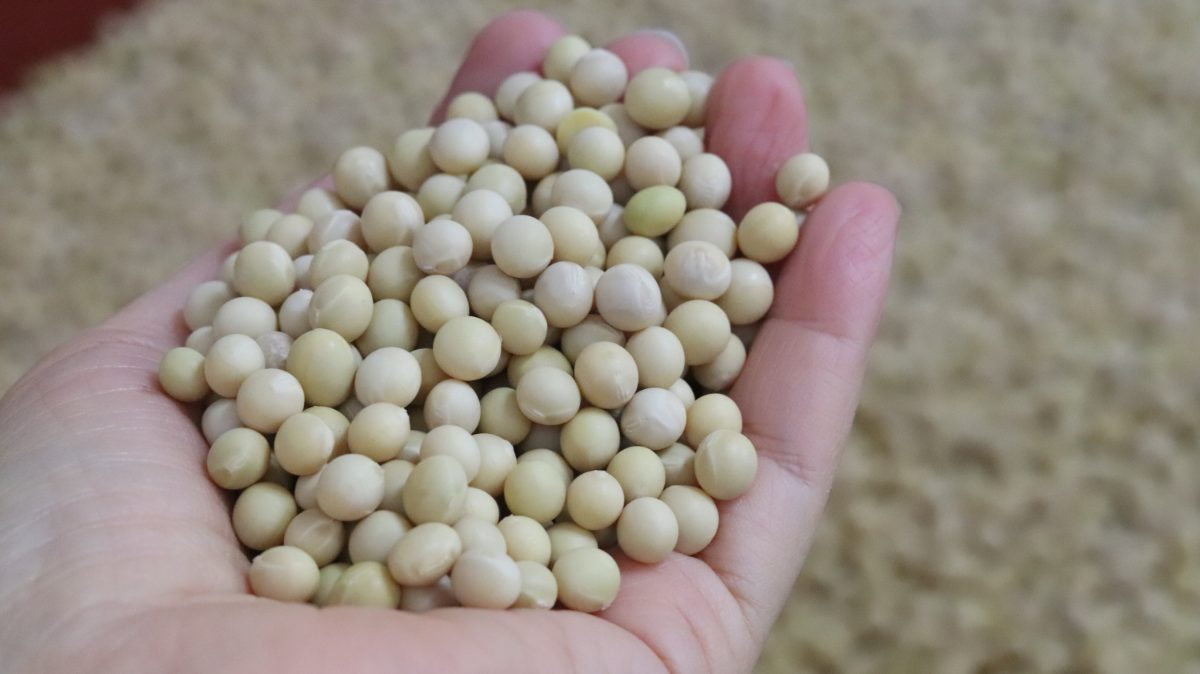
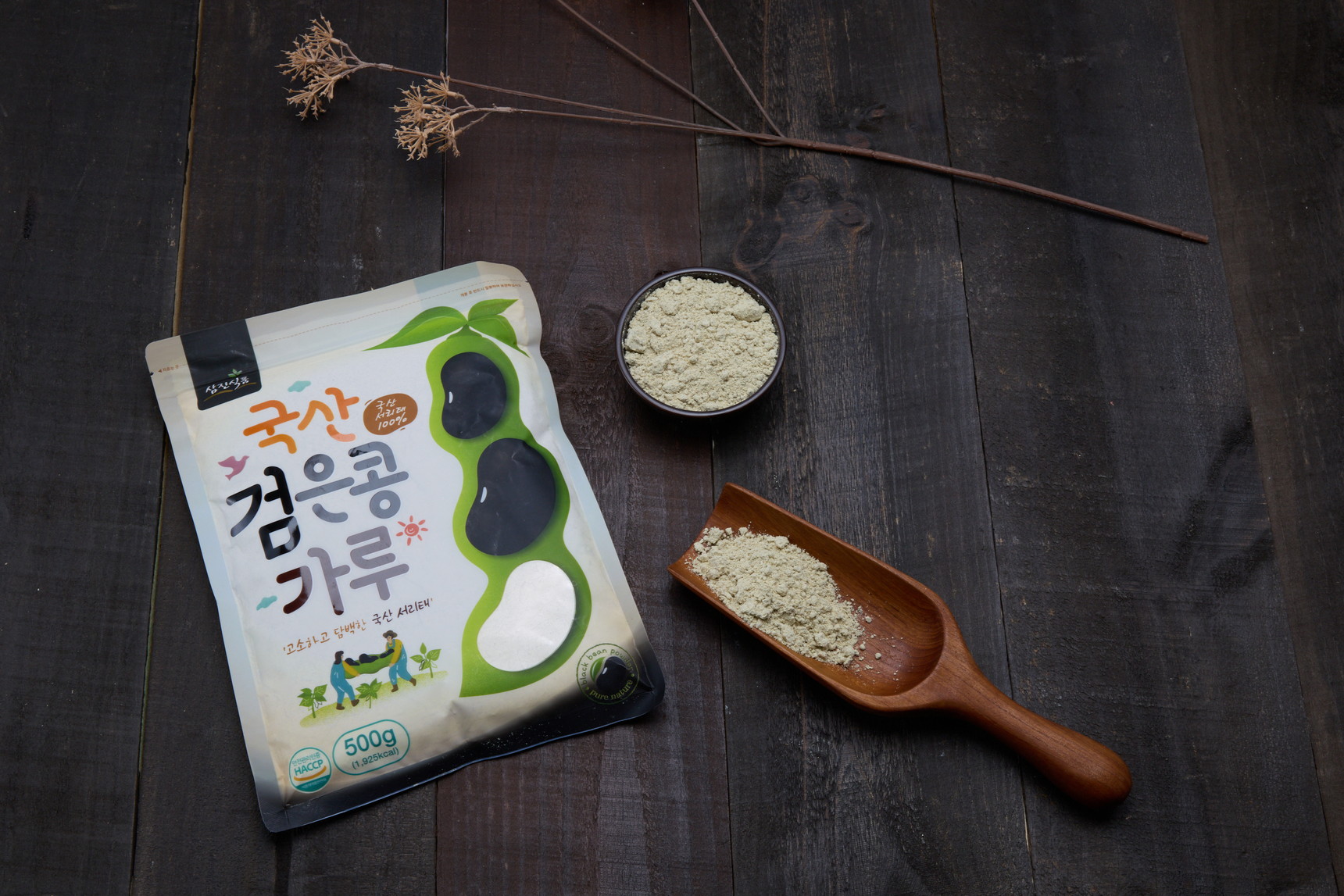
black beans and powder flat lay

Point 1

100% Seoritae Black Beans

One ingredient, nothing else. Whole Korean-grown seoritae — black skin, green heart — selected and cleaned at the mill in Seongju. Full contents: 100% black soybeans.
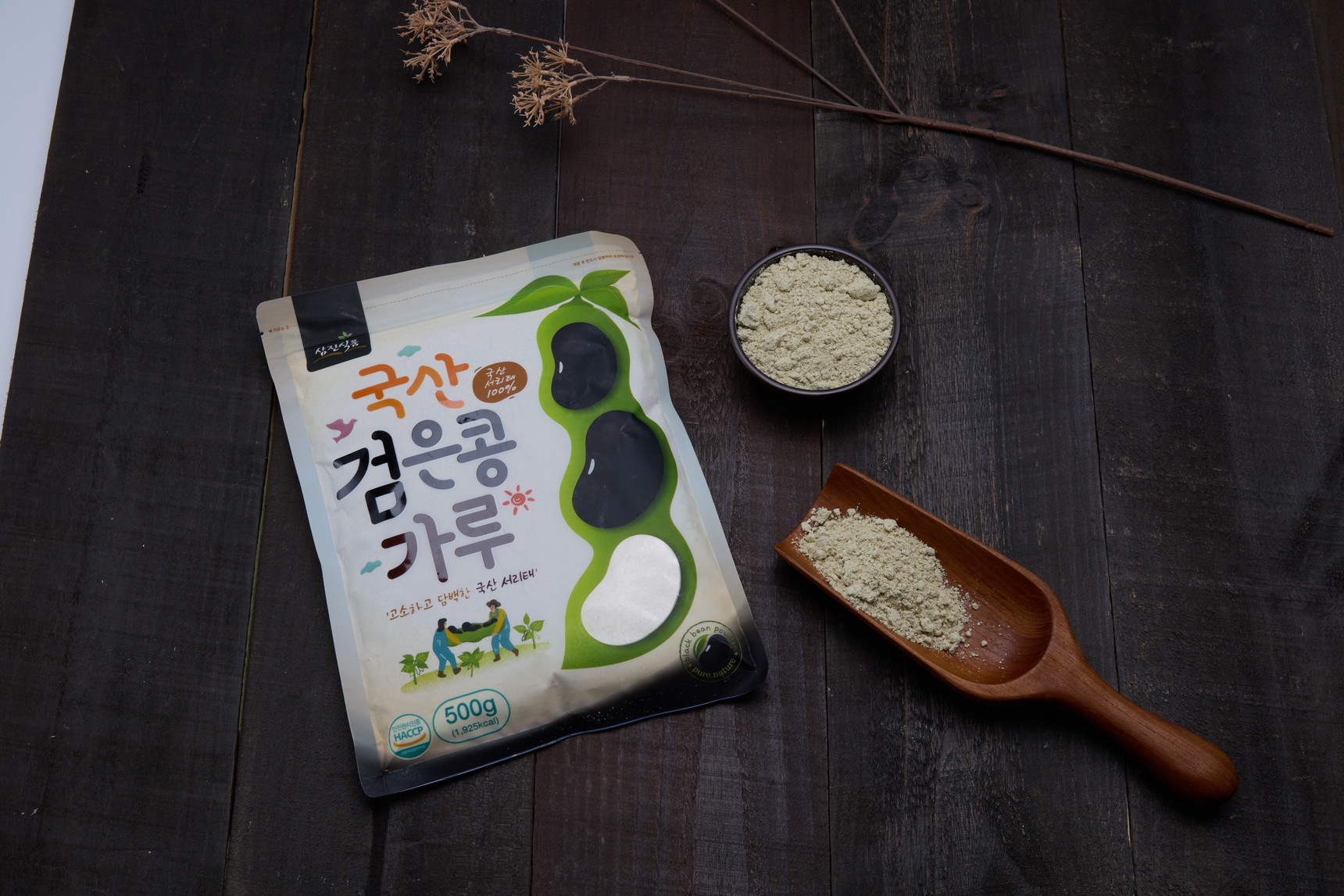
roasted black bean powder in a bowl

Point 2

Roasted Low and Slow, Then Micro-Milled

Whole beans are roasted at low temperature in-house, then micro-milled into a fine, smooth roasted soybean powder. Slow roasting keeps the nutty aroma deep and the color even.

Nutritional Value

35g of protein per 100g — the beans do the heavy lifting. No added salt, no added sugar: the 7g of sugars is the bean's own.

35gProtein per 100gmore protein than five eggs
10mgSodium per 100gnothing added — the label shows it
Energy384 kcal
Protein35g
Fat19g
Saturated fat<1g
Carbohydrate32g
Sugars7g
Sodium10mg

Values from the product nutrition label, per 100g (3.5 oz). Egg comparison ≈6g protein per large egg, for reference only.

How to Use It

Injeolmi & rice cakes

The classic coating for injeolmi; works on any mochi or rice cake where you'd use kinako.

Injeolmi bingsu & toast

Dust it over shaved ice, or layer with honey between toasted milk bread.

Baking

Swap about ¼ of the wheat flour in cookies and pound cakes; reduce liquids slightly.

Lattes & smoothies

1–2 tablespoons into milk, oat milk, or a banana smoothie.

Yogurt & ice cream

A nutty finishing dust.

Porridge & overnight oats

Stir in for a roasted base note.
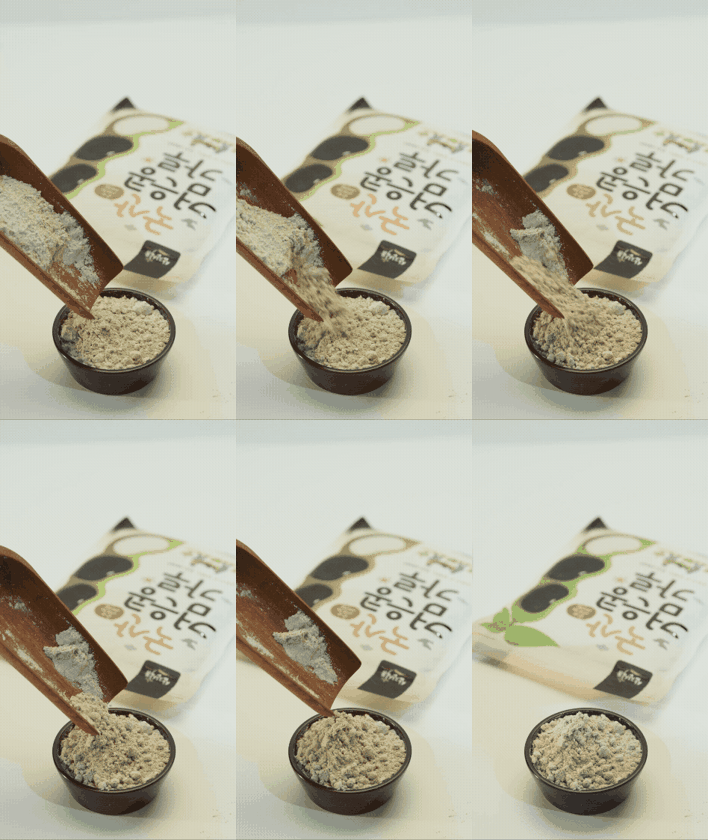
black bean powder poured from a wooden scoop

Certified, Audited, Verified

HACCP certification mark

HACCP

FSSC 22000 certification mark

FSSC 22000

Manufactured in an FDA registered facility

FDA Registered Facility

From Bean to Powder

01

Select — whole Korean seoritae black beans, cleaned and sorted

02

Roast — low temperature, in-house, whole beans

03

Micro-mill — ground fine in small batches at the Seongju facility

04

Pack — sealed in a resealable zipper pouch, 500g (17.6 oz)

Questions, Answered

Is black bean powder the same as kinako?

Close cousins. Both are roasted soybean flours; kinako is the Japanese name, konggaru the Korean. This one is 100% black soybeans (seoritae).

Can I use this as a kinako substitute?

Yes, one-to-one. Anywhere a recipe calls for kinako, this works — with a deeper roasted flavor.

Is this black bean powder roasted or raw?

Roasted. Whole seoritae beans, low temperature, in-house, then micro-milled.

How much protein is in black bean powder?

35g per 100g, per the nutrition label.

Does it contain allergens?

Contains soybeans. Made in a facility that also processes milk, peanuts, and wheat.

Where can I buy Korean black bean powder?

Right here, and at Korean grocery stores in select regions. For stockists or volume orders, use the inquiry menu on this site.

How should I store it?

Cool and dry; reseal the zipper pouch and refrigerate after opening.

Do you sell wholesale?

Yes — reach us through the inquiry menu on this site.
Samjin food logo

Since 1983, Samjin has roasted and micro-milled beans in Seongju, Korea. Roasting, micro-milling, packing — all under one roof.
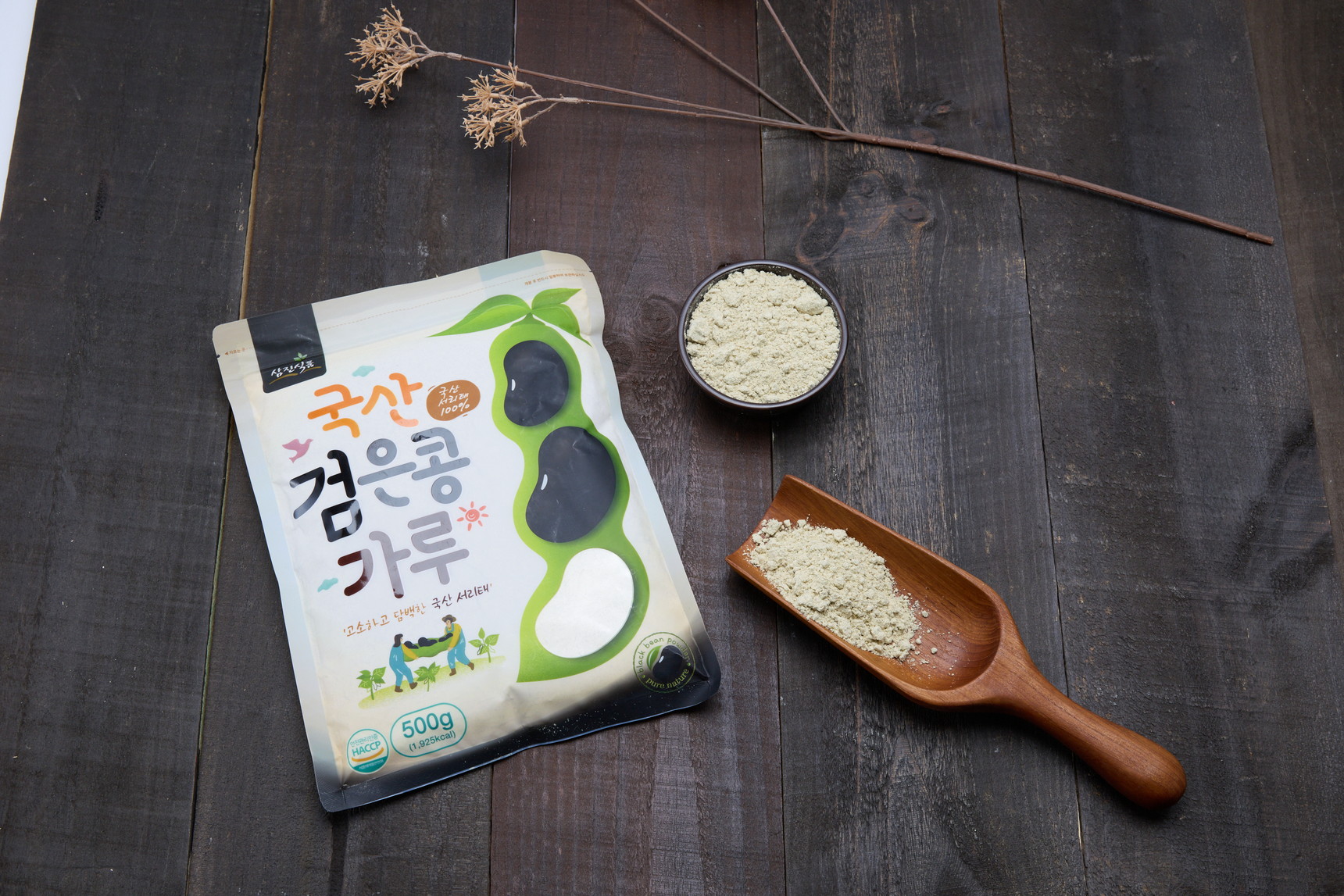
Korean black bean powder 500g package close-up

One Bean, Roasted Well

Korean black bean powder, roasted in-house and micro-milled in Seongju since 1983 —
the black soybean kinako of Korea, from a single ingredient.

NameKorean Black Bean Powder
Net weight500g (17.6 oz)
Ingredients100% black soybeans (seoritae)
StorageCool and dry; refrigerate after opening

Contains soybeans. Made in a facility that also processes milk, peanuts, and wheat.

Looking for a ready-to-drink blend? → Black Bean Mixed Grain Powder (Misugaru)

Soybean Powder for Cold Noodle Soup
[850g/30oz]

삼진식품 콩밭애콩국수콩가루 850g
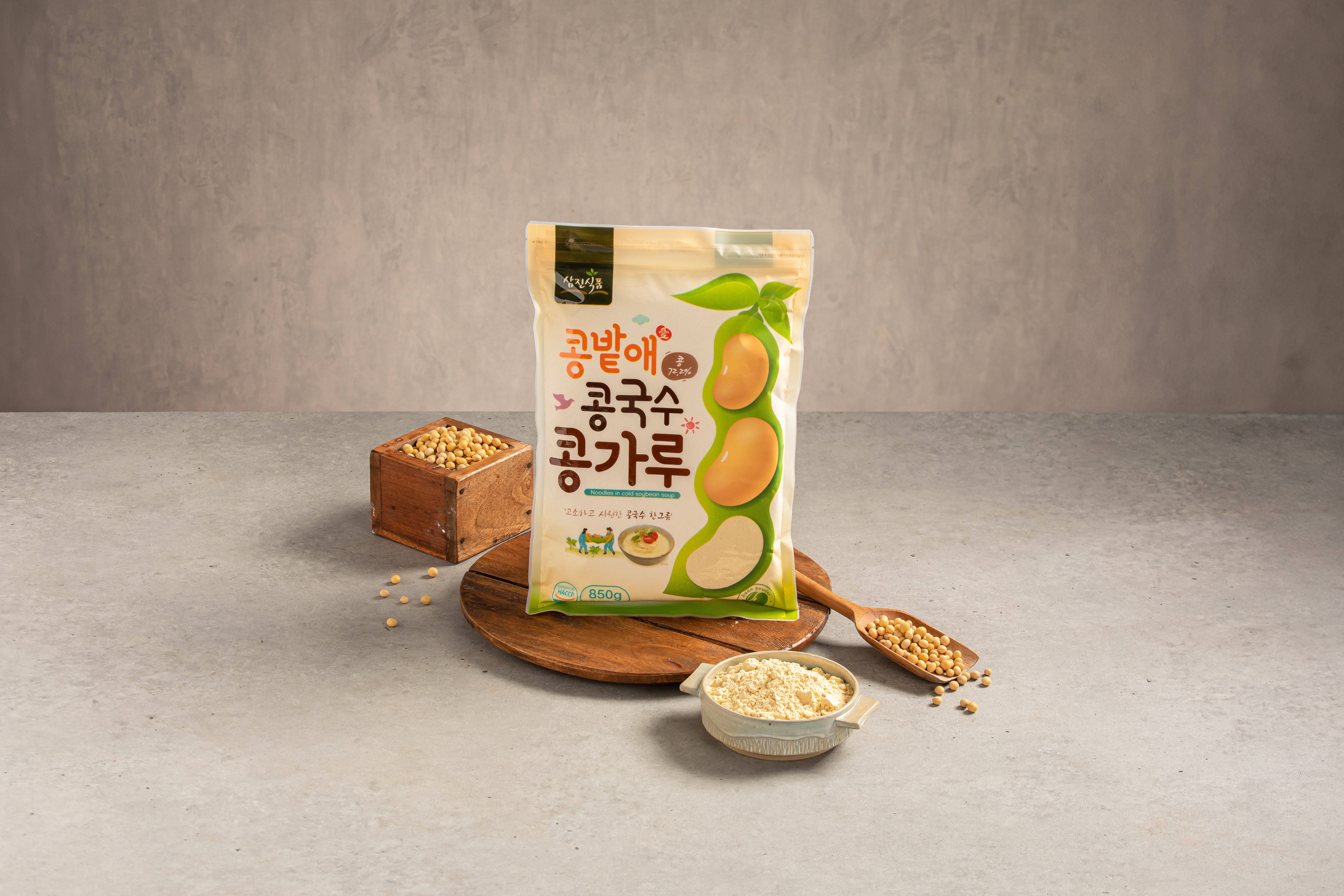
KONGBATAE soybean powder for cold noodle soup 850g pouch with roasted soybeans

Kongguksu · Korean cold soybean noodle soup

KONGBATAE Soybean Powder for Cold Noodle Soup 850g

Soybean powder for cold noodle soup — roasted in-house and micro-milled in Seongju since 1983, then blended with roasted peanuts and sesame. Stir into cold water and the kongguksu broth is ready.

Just add cold waterRoasted in-houseMicro-milledHACCP · FSSC 22000

What is kongguksu?

Korea's Summer Soybean Noodle Soup

Kongguksu is a chilled Korean noodle soup served in a rich, creamy soybean broth — a summer staple across Korea. Traditionally the broth means soaking, boiling and grinding soybeans by hand.

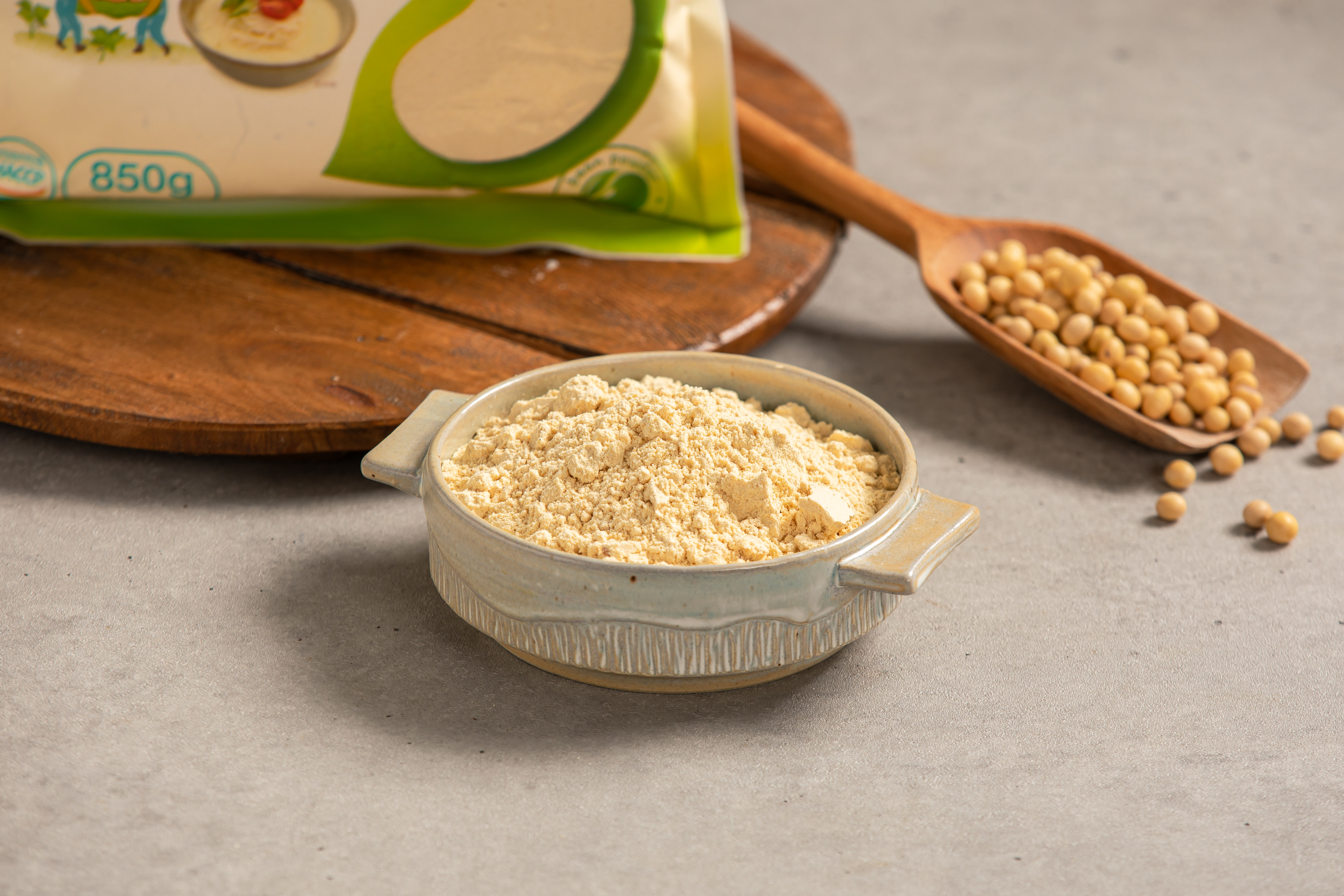
This soybean powder for cold noodle soup does that work for you. Soybeans are cleaned, roasted in-house and micro-milled into a fine powder, then blended with roasted peanuts and sesame for a nutty, creamy broth. Stir it into cold water and the broth is ready.

Why this powder

Two Things Worth Knowing

01

No Soaking, No Grinding

Skip the overnight soak, the boiling and the blender. Mix the powder with cold water, chill, and pour over cooked noodles.

02

Roasted In-House, Micro-Milled

Soybeans are roasted at our Seongju facility and micro-milled into a fine powder, so the broth comes out smooth and evenly thick every time.

Samjin food

How to

Broth in Three Steps

01

Mix

Stir the powder into cold water until smooth.

02

Chill

Chill the broth, or add ice.

03

Pour

Pour over cooked, rinsed noodles. Top with cucumber or tomato.

Adjust the thickness to taste — more powder for a richer broth.

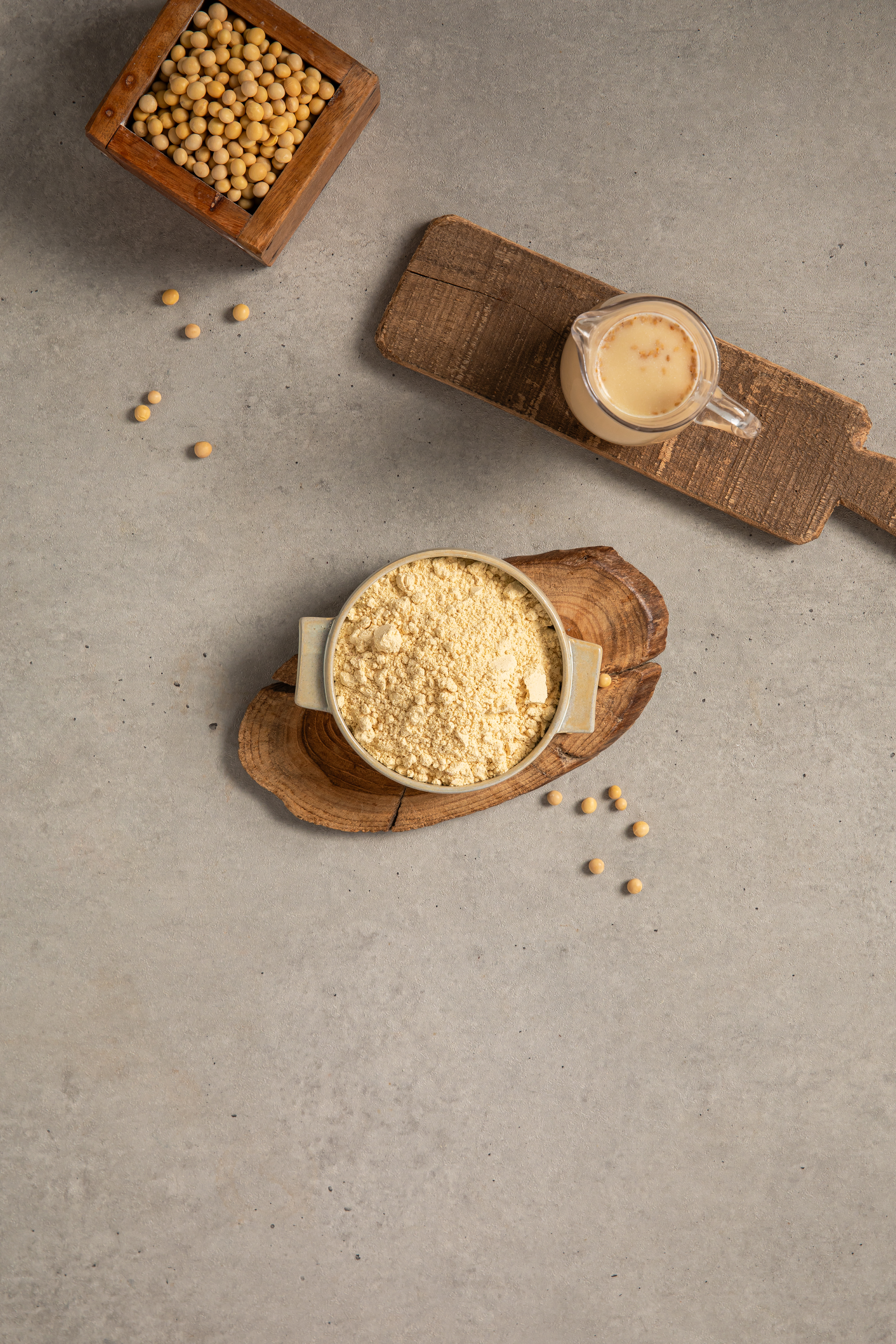
Kongguksu cold soybean noodle soup made with KONGBATAE soybean powder

Uses

Kongguksu and Beyond

Kongguksu

Korean cold soybean noodle soup.

Soy milk drink

Mix with cold water or milk and serve over ice.

Restaurants and food service

Consistent broth from a large 850 g pouch.

Home kitchens

Summer noodles without soaking or grinding.

What goes in

Ingredients

Soybean flour, soybean, vegetable cream, dextrin, corn, salt, roasted peanuts, roasted sesame seeds.

Allergens. Contains soybean, milk, peanuts and sesame. Made in a facility that also processes wheat.

Storage — keep in a cool, dry place away from direct sunlight, and reseal the zipper pouch after opening.

Nutrition

Kongguksu Powder Nutrition Facts

25 gProtein per 100 gfrom soybeans, peanuts and sesame
15 gDietary fibre per 100 gper the nutrition label
Energy398 kcal
Protein25 g
Fat14 g
Saturated fat5.3 g
Trans fat0 g
Cholesterol0 mg
Carbohydrate52 g
Dietary fibre15 g
Sugars2.6 g
Sodium787 mg
Calcium127 mg
Iron5.2 mg
Potassium1,268 mg

Values per 100 g of powder, from the product nutrition label.

Made in Seongju, Korea

From Bean to Pouch

01

Select

Soybeans cleaned and sorted.

02

Roast

Roasted in-house.

03

Micro-mill

Ground into a fine powder at the Seongju facility.

04

Blend

Mixed with roasted peanuts, roasted sesame and other ingredients.

05

Screen

Two 12,000-gauss magnetic separators and a metal detector.

06

Pack

Sealed in an 850 g resealable zipper pouch.

Quality

Certified, Audited, Verified

HACCP certification mark

HACCP

FSSC 22000 certification mark

FSSC 22000

US FDA registered food facility mark

FDA Registered Facility

Registered with China's GACC as an overseas manufacturer, and with the US FDA as a food facility.

FAQ

Questions, Answered

What is soybean powder for cold noodle soup?

A ready-to-mix powder for kongguksu, Korea's chilled soybean noodle soup. Mix it with cold water for an instant creamy soybean broth.

Do I need to soak or boil soybeans?

No. The soybeans are already roasted and micro-milled. Just mix with cold water.

Does it contain allergens?

Yes. It contains soybean, milk, peanuts and sesame, and is made in a facility that also processes wheat.

Can I drink it as soy milk?

Yes. Mix with cold water or milk and serve over ice.

Who is the 850 g pouch for?

Restaurants, food service kitchens and households that make kongguksu often.

Do you supply importers and distributors?

Yes. For stockists, volume orders, or OEM and ODM production, please use the Contact Us page.

How should I store it?

Keep in a cool, dry place away from direct sunlight, and reseal the zipper pouch after opening.

Who makes it

Samjin food, Seongju

Samjin food is a Korean grain and pulse processing manufacturer in Seongju, Gyeongsangbuk-do, founded in 1983. In-house roasting, micro-milling and packing are all done under one roof. We export to the United States, Canada, Australia, Hong Kong and China.

KONGBATAE soybean powder for cold noodle soup served as kongguksu
삼진식품

Summer Noodles, Made Simple

Soybean powder for cold noodle soup, roasted and micro-milled in Seongju since 1983. Contains soybean, milk, peanuts and sesame.

Contact us · See all products

Sweet Roasted Soybean Powder
[1kg/2.2lb]

삼진식품 콩고물 1kg

Samjin food · Seongju, Korea

Rice cake coating powder, by the kilo

The rice cake coating powder Korean kitchens call kongomul, in the 1 kg pack. Sweet roasted soybean powder, made for rice cake shops, bakeries and kitchens that go through it steadily. We roast the whole bean at our own plant in Korea and mill it straight after — not months earlier, somewhere else.

Roasted and milled in Korea 1 kg × 10 per case Ready to use, no mixing HACCP certified

What is rice cake coating powder?

Definition

Korean rice cakes are sticky, so they are rolled in a dry powder before serving. That rice cake coating powder is called kongomul — soybeans roasted whole, milled fine, then blended with a little sugar and salt. It is closest to Japanese kinako, with two differences: the roast is taken further, and the seasoning is already in the bag. Without the sugar and salt it would be plain roasted soybean powder. You do not mix anything. Open it, and dust it on.

Samjin food has roasted and milled grains and beans in Seongju, Gyeongsangbuk-do since 1983.
Every stage runs in our own plant, from intake to packing.

SINCE 1983 · SEONGJU, KOREA

Four things worth knowing

Check point

Nutrition figures below are taken from the product label; the rest describe how the product is made and packed.

0km Between roasting and milling

Both happen on the same line, on the same day. Aroma starts fading the moment a bean is milled.

27g Protein per 100 g

From the soybean itself. No isolate or concentrate is added.

25g Dietary fibre per 100 g

The whole bean is roasted and milled, hull included.

1kg Ten packs per case

A 500 g retail pack is also produced, sixteen to a case.

What goes in

Ingredients

Three ingredients, and one process decision that matters more than any of them.

Whole raw soybeans before roasting - Samjin food sweet roasted soybean powder

Raw beans as they arrive, before roasting.

Whole soybean

We buy raw beans, not pre-roasted ones. They are roasted in the shell and milled with the hull left in, which is where the fibre and the body of the powder come from. Hulling first would give a paler, softer powder and lose most of what makes kongomul worth eating.

Sugar and salt

Seasoning is already in the bag, in the proportion Korean households use. The salt is roasted salt, a Korean type made by heating sea salt to a high temperature. It rounds the sweetness rather than making the powder taste salty.

INGREDIENT STATEMENT — in order of quantity

Soybean Sugar (sugar, starch) Roasted salt

Ingredient ratios are not disclosed. Full origin declarations are printed on the pack and are available on the specification sheet on request.

How it is made

Process

A rice cake coating powder lives or dies on the roast. Too light and it tastes of raw bean; too dark and it turns bitter on the rice cake.

Intake & inspection› Sorting› Electric cauldron roasting› Milling› Blending› Metal detection› Weighing & packing
Roasted soybean powder being scooped from a bowl after milling - Samjin food

We roast in electric cauldrons and hold the roasting condition for each production run rather than working to a single fixed setting. Beans vary by harvest, and the roast has to follow them. After milling, sugar and salt are blended in — not sprinkled on afterwards — so the seasoning is even through the bag rather than concentrated in whatever you scoop first.

Where the roasting happens

Roasted bean loses aroma steadily from the moment it is milled. That is why the gap between roasting and milling matters.

We buy raw beans and do both steps ourselves. Roasting and milling run on the same line on the same day, at our plant in Seongju.

Nutrition, honestly

Nutrition

What stands out, and what to know before buying.

What stands out

Protein27 g
Dietary fibre25 g
Potassium1,461 mg
Cholesterol0 mg

Per 100 g. The protein and fibre are what the soybean brings; nothing is added to raise either figure.

What to know

Sugars21 g
Sodium169 mg
Fat18 g
Energy405 kcal

Per 100 g. This is a seasoned product, so sugar and salt are in it by design. If you would rather season it yourself, our unsweetened roasted soybean powder is the same bean without either.

Energy405 kcal
Carbohydrate47 g
Sugars21 g
Dietary fibre25 g
Protein27 g
Fat18 g
Saturated fat3 g
Trans fat0 g
Cholesterol0 mg
Sodium169 mg
Calcium142 mg
Iron6 mg
Potassium1,461 mg
Vitamin D0 µg

All values per 100 g, as declared on the product label. Figures are given as absolute amounts; daily value percentages are omitted because reference intakes differ between countries.

What it tastes like

Taste

Deeply roasted and nutty, closer to toasted sesame than to raw bean. It is sweet — this is a seasoned coating, not a plain flour, and the sugar is there so the powder works straight from the bag. The salt sits underneath and keeps the sweetness from going flat. On a warm rice cake the powder softens slightly and the roast comes forward. Texture is fine but not powdery-smooth; the hull is still in there, and you can feel it.

How to use it

How to

No mixing, no cooking. It is finished as it comes.

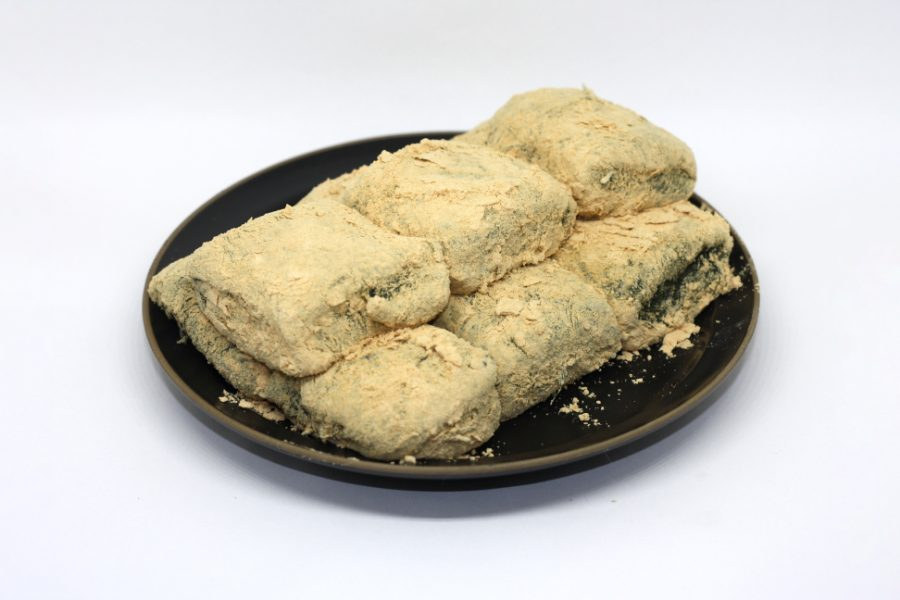
Injeolmi Korean rice cake coated in sweet roasted soybean powder - Samjin food

Injeolmi rolled in kongomul, the use it was made for.

Open the bag

Already seasoned. Nothing to add.

Spread on a plate

A shallow, even layer works best.

Roll the rice cake

Turn it until every side is coated.

Serve

Best while the rice cake is still warm.

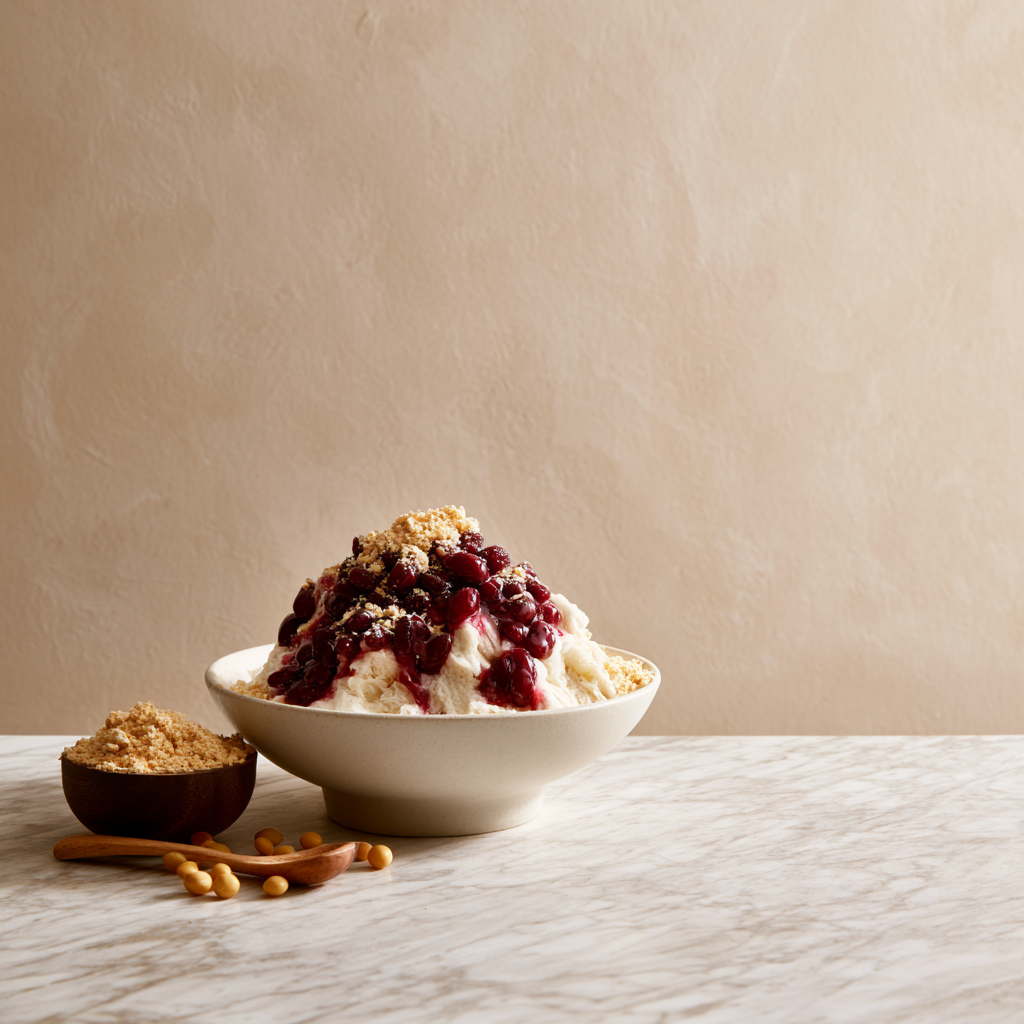
Korean shaved ice dessert topped with sweet roasted soybean powder, red bean and rice cake cubes - Samjin food

Injeolmi bingsu — shaved ice under red bean, rice cake and a heavy dusting of the powder.

Rice cake shops

The use it was made for. Rice cake is cut into cubes and rolled in the powder just before serving, so the coating stays dry. At 1 kg the pack lasts a working day rather than a batch.

Shaved ice and frozen desserts

Injeolmi bingsu is the Korean version — shaved ice with condensed milk, red bean and rice cake, finished with the powder. The roast holds up against cold and sweetness better than a plain flour would.

Bakery and dessert kitchens

Folded into doughs and creams, dusted over frozen desserts, or used as a finishing powder. This rice cake coating powder behaves like a seasoned nut powder, so it works anywhere a roasted bean or ground sesame powder would.

Certification

Certification
HACCP

Certified for processed pulse products. Korean food safety management certification issued by the Ministry of Food and Drug Safety.

FSSC 22000

Food safety system certification recognised by the Global Food Safety Initiative, held at plant level.

US FDA food facility registration

Our plant is registered as a food facility with the US Food and Drug Administration. Registration is a filing requirement for food shipped to the United States and does not constitute FDA approval or endorsement of the product.

Who makes it

Manufacturer
Since 1983

Founded in Daegu as Yudong Food, moved to the current plant in Seongju in 1998.

Own plant, no outsourcing

Intake, sorting, roasting, milling, blending, metal detection and packing all run in house, which is why roast and particle size can be adjusted to order.

Also an ingredient supplier

The same lines supply soybean and grain powders to rice cake producers, bakeries and food manufacturers. OEM and ODM production is available.

Frequently asked questions

FAQ

How is this different from kinako?

Both are roasted soybean powder. Kongomul is roasted further, which gives a darker colour and a stronger nutty flavour, and it comes already blended with sugar and salt. Kinako is usually unsweetened, so it is seasoned at the point of use. If a recipe calls for kinako plus sugar, this is close to that already mixed.

Does it contain allergens?

Yes. This product contains soy. It is manufactured in a facility that also handles sesame, peanut and wheat products.

Is there an unsweetened version?

Yes. Our roasted soybean powder is the same bean roasted and milled without sugar or salt, for buyers who season their own formulation. It is available in 500 g and 1 kg.

Can I use it as a drink powder?

You can stir it into milk, and some people do. It is formulated as a coating rather than a beverage, so it does not dissolve completely and will settle. For drinking, our mixed grain powders are made for that purpose.

What is the difference between the 1 kg and the 500 g pack?

Pack size and case configuration. The 1 kg pack ships ten to a case and is intended for kitchens and shops; the 500 g pack ships sixteen to a case and is the retail size. Ingredient sourcing differs between the two, and the declarations are printed on each pack.

What makes this different from other soybean powders?

Where the roasting happens. We buy raw beans and do both steps at our own plant, milling straight after the roast rather than importing finished powder. Origin declarations for each ingredient are printed on the pack and available on the specification sheet.

Do you supply this in bulk or under private label?

Yes. We export to the United States, Canada, Australia, Hong Kong and China, and we produce under OEM and ODM arrangements. Roast level and particle size can be adjusted to your specification.

Specification

Product data
Product nameSweet Roasted Soybean Powder (kongomul)
Product typeProcessed pulse product
Net weight1 kg (2.2 lb)
IngredientsSoybean, sugar (sugar, starch), roasted salt
AllergenContains soy
StorageStore in a cool, dry place away from direct sunlight. Keep sealed after opening.
ManufacturerSamjin food, 31 Yongjeonggongdan-gil, Yongam-myeon, Seongju-gun, Gyeongsangbuk-do, Republic of Korea
Country of originRepublic of Korea

ALLERGEN INFORMATION — This product contains soy. It is manufactured in a facility that also processes sesame, peanut and wheat.

Also available in other packs

The 500 g retail pack of the same product, and the unsweetened version for kitchens that season their own.

Soybean Powder for Shaved Ice
[70g/2.47oz]

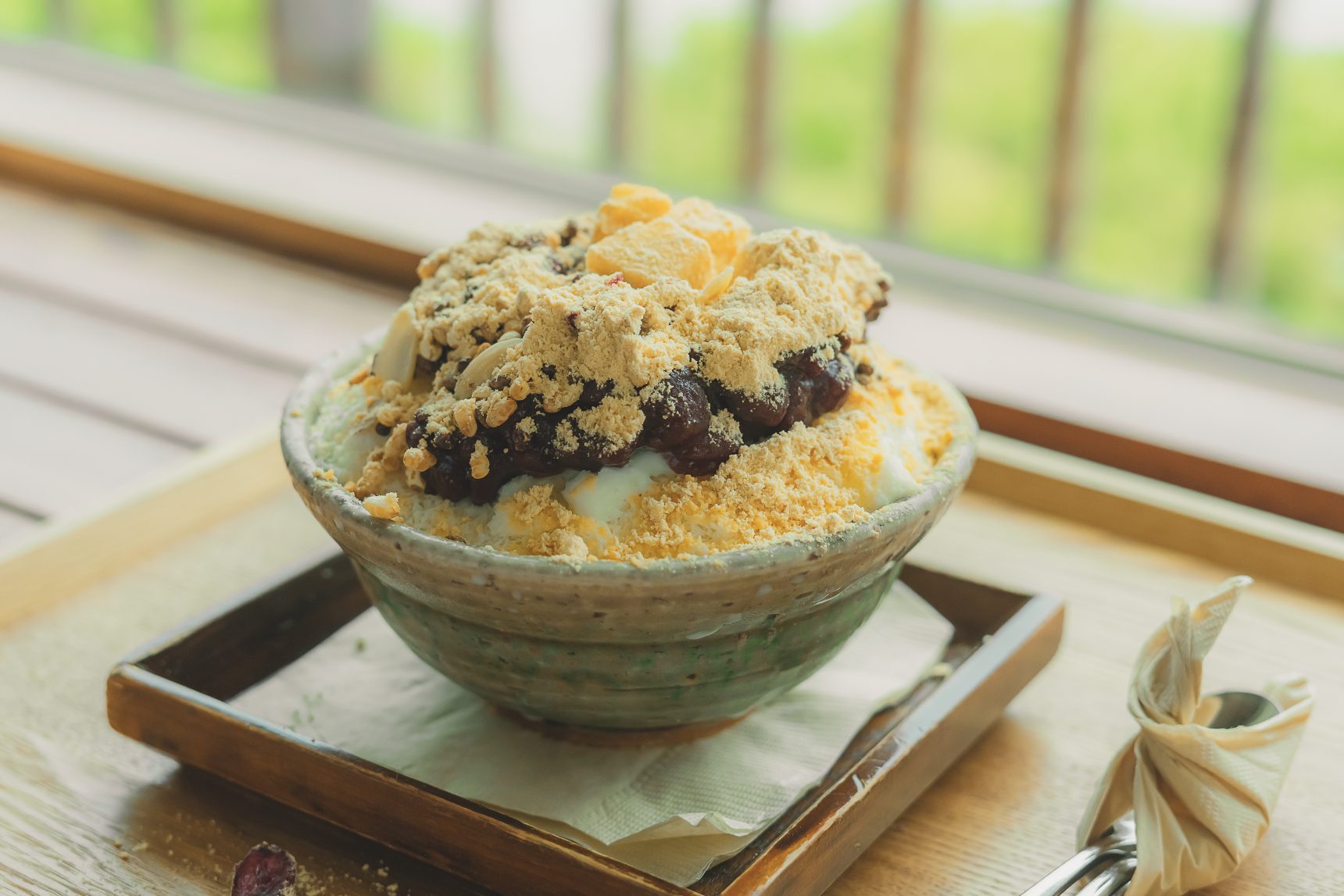
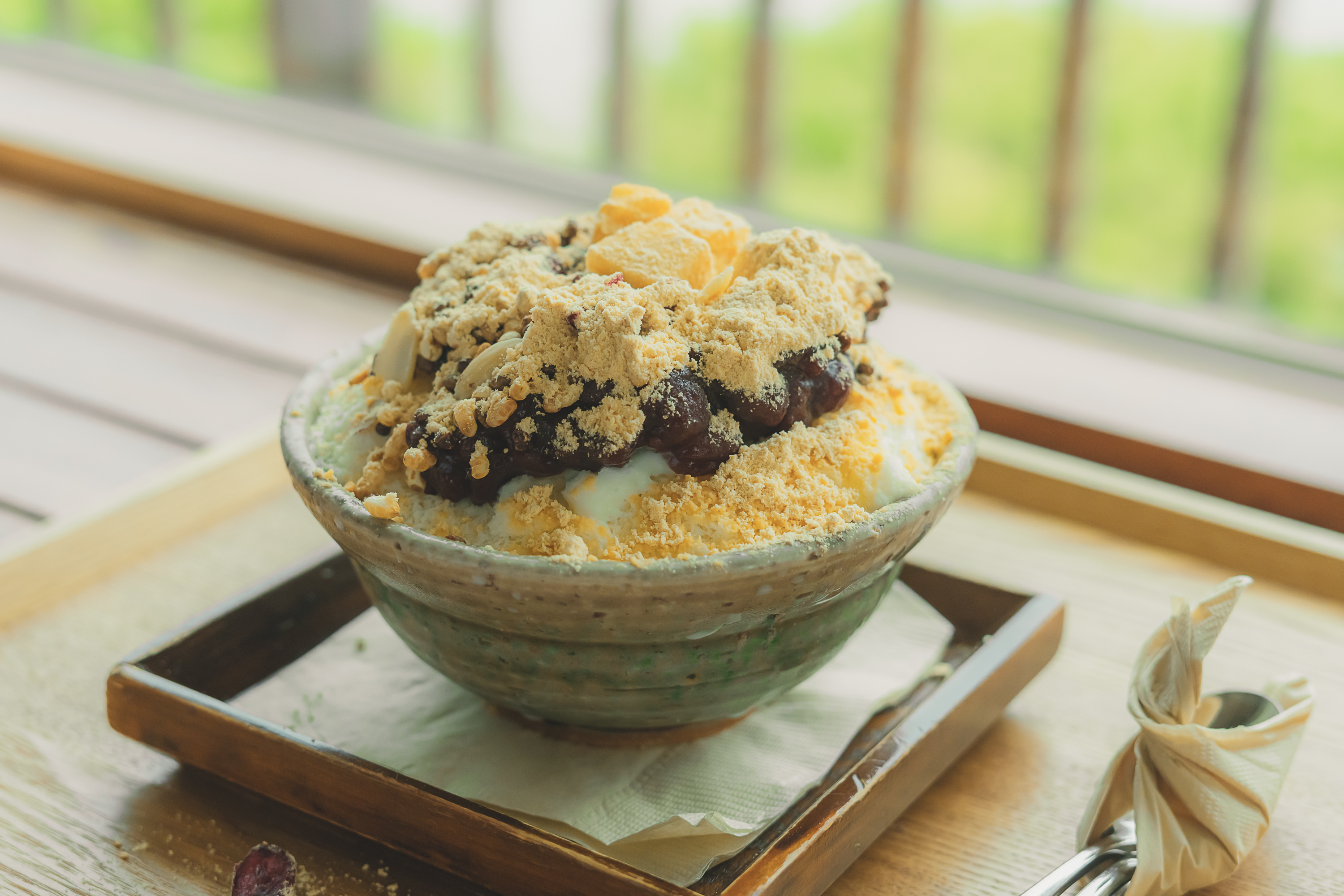
Korean injeolmi bingsu topped with roasted soybean powder and red beans

Korean Dessert · Bingsu

Soybean Powder
for Shaved Ice

BINGSUAE · 70g zipper pouch · Korean-grown soybeans,
roasted in-house and micro-milled in Seongju since 1983

All-in-one blend Korean soybeans 68.1% HACCP certified

What Is Soybean Powder for Shaved Ice?

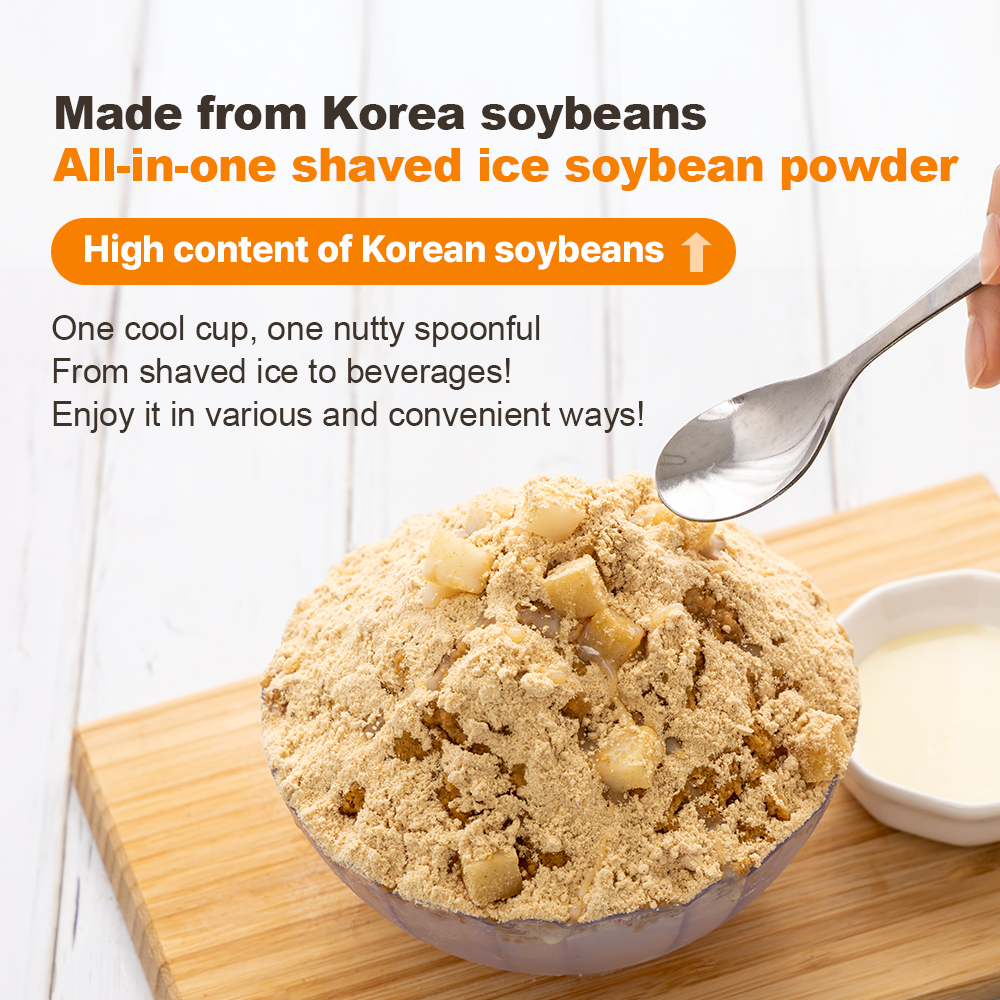
Soybean powder for shaved ice is an all-in-one bingsu topping: Korean-grown soybeans, roasted in-house and micro-milled into a fine powder, then blended with sugar, milk cream, red bean and salt — the nutty layer that finishes a bowl of Korean injeolmi bingsu.

Bingsu began centuries ago as a royal summer delicacy in Korea. Today it is the icon of Seoul's café culture — soft milk snow, shaved fine as powder and piled high, topped with sweet red beans, chewy rice cake, and a generous dusting of roasted soybean powder. That final nutty layer is what this pouch is for.

#bingsu #injeolmibingsu #konggaru #koreandessert
Injeolmi bingsu at a Korean café with milk snow, red bean and roasted soybean powder

Skip the Ingredient Hunt

Most bingsu recipes send you searching — roasted soybean powder, condensed milk, sugar, red bean, salt. We blended them all, the way Korean dessert shops do. One pouch. Zero hunting.

The old wayBINGSUAE
Soybean powderRoasted in-house, micro-milled
Condensed milkMilk cream, already blended
SugarJust enough sweetness
Red beanKorean red bean, already in
SaltRoasted salt to balance it

"Nutty like peanut butter, toasty like roasted grain — the taste of a Seoul dessert café."

BINGSUAE soybean powder 70g made from Korean soybeans, all-in-one shaved ice topping

Point 1

Korean-Grown Soybeans

Korean soybeans make up 68.1% of the blend. They are cleaned and sorted at our Seongju facility before roasting.

Point 2

Roasted In-House, Micro-Milled

Whole soybeans are roasted at low temperature in-house, then micro-milled into a fine, smooth powder that melts softly over milk snow.

Three Steps. No Machine Needed.

01

Freeze milk in an ice tray

02

Blitz into fluffy snow with a blender or food processor

03

Sprinkle generously over the milk snow — that's it

Even faster: use store-bought shaved ice or vanilla ice cream as your base.

Bingsu and Beyond

Classic patbingsu

With sweet red beans on top — the recipe this blend was born for.

Injeolmi bingsu

Add chewy rice cake or mochi.

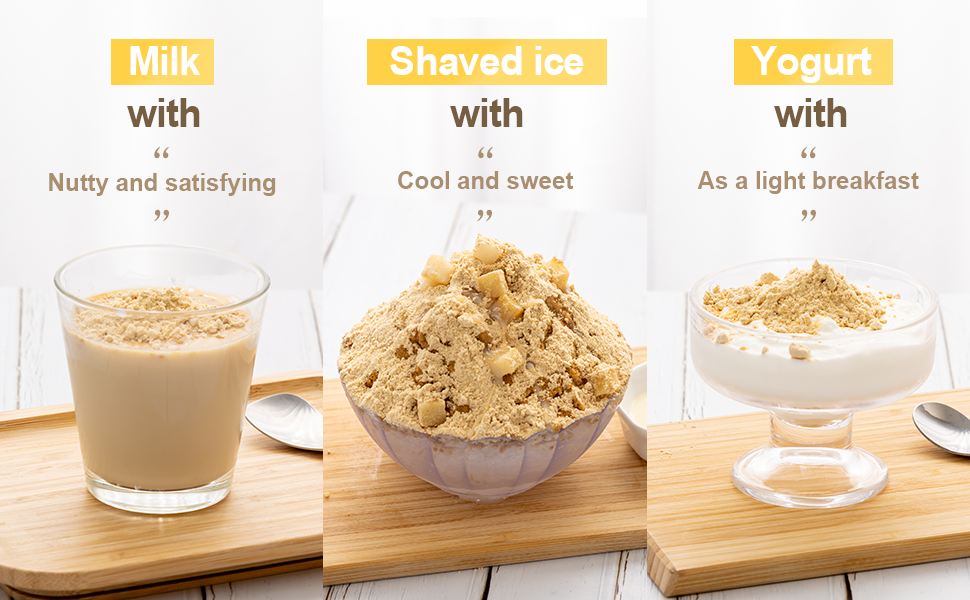
Nutty milk

Stir into cold milk for a sweet, nutty Korean-style milk drink.

Injeolmi latte

Stir into warm milk.

Over ice cream

A thick dusting on vanilla.

Yogurt bowl

A nutty finishing dust.

Soybean powder for shaved ice with milk, shaved ice and yogurt

Nutritional Value

Per 100g, from the product nutrition label. A natural source of plant protein and fiber from roasted soybeans.

23gProtein per 100gfrom roasted soybeans
28gDietary fiber per 100gper the nutrition label
Energy395 kcal
Protein23g
Fat15g
Saturated fat5.2g
Cholesterol11mg
Carbohydrate57g
Dietary fiber28g
Sugars25g
Sodium145mg

Values per 100g (3.5 oz).

From Bean to Pouch

01

Select — Korean-grown soybeans, cleaned and sorted

02

Roast — low temperature, in-house, whole beans

03

Micro-mill — ground into a fine powder at the Seongju facility

04

Blend — with sugar, milk cream, red bean and salt

05

Screen — two 12,000-gauss magnetic separators and a metal detector

06

Pack — 70g zipper pouch, 7 pouches per box

Certified, Audited, Verified

HACCP certification mark

HACCP

FSSC 22000 certification mark

FSSC 22000

Manufactured in an FDA registered facility

FDA Registered Facility

GACC

China GACC Registered

Questions, Answered

What is soybean powder for shaved ice?

An all-in-one bingsu topping: roasted, micro-milled Korean soybean powder blended with sugar, milk cream, red bean and salt. Sprinkle it over milk snow for Korean injeolmi bingsu.

Is this the same as kinako?

It's built on Korea's roasted soybean powder (konggaru), which has a similar nutty character to kinako — blended here with sugar, milk cream and red bean specifically for bingsu.

Do I need a bingsu machine?

No. Frozen milk and a blender make fluffy milk snow at home.

Does it contain allergens?

Yes — soybean and milk.

Is it vegetarian?

Vegetarian, yes. It contains milk, so it is not vegan.

How should I store it?

Reseal the zipper pouch tightly and keep in a cool, dry place.

Do you supply cafés and distributors?

Yes. For stockists, cafés, volume orders, or OEM and ODM production, reach us through the inquiry menu on this site. A 1kg pack is also available.

Samjin food logo

Since 1983, Samjin food has roasted and micro-milled grains and beans in Seongju, Korea. Roasting, micro-milling, blending and packing — all under one roof.

Product Specifications

NameSoybean Powder for Shaved Ice (BINGSUAE)
Net weight70g (2.47 oz) zipper pouch
Packing70g × 7 pouches × 8 boxes per carton
IngredientsSoybean (Korea) 68.1%, sugar, processed milk cream, red bean (Korea), roasted salt (Korea)
AllergensContains soybean and milk
StorageCool and dry; reseal after opening
Barcode8803906000257
HS Code1901.90
OriginMade in Korea · Samjin food, Seongju

Need a larger pack for your café? → Soybean Powder for Shaved Ice 1kg
Prefer pure black bean powder? → Korean Black Bean Powder

Black bean mixed grain powder
[40g/1.41oz]

GOSOSO · Samjin food, Seongju Korea

One pouch, one cup. Korean black bean grain powder

A single-serve 40 g spout pouch of black bean misugaru made with 44% Korean seoritae black soybean and roasted whole grains. Unscrew the cap, pour in 200 ml of milk, close the cap and shake. Every ingredient except the sugar is grown in Korea.

Outstanding Product, 2026 RICE SHOW — Korea Rice Food Products Association

Korean seoritae 44% Single-serve 40 g spout pouch HACCP certified Made in Korea

What is misugaru?

Definition

Misugaru is a Korean grain cereal drink made from grains and beans that are roasted and then milled together. It is not brewed or cooked. The powder dissolves directly into cold milk or water, which is how Koreans have taken it as a quick meal replacement in summer and as a breakfast drink through the year. GOSOSO is a black bean version: seoritae, a Korean black soybean with a green inner flesh, makes up the largest share of the blend, joined by black rice, soybean, barley, rice and glutinous rice.

Samjin food has roasted and milled grains in Seongju, Gyeongsangbuk-do since 1983.
We run every stage in our own plant, from intake to packing.
GOSOSO is our own brand, made on the same lines that supply other food manufacturers.

SINCE 1983 · SEONGJU, KOREA

Four things worth knowing

Check point

The numbers below are taken from the product label and the nutrition analysis.

44% Korean seoritae

Black soybean is the single largest ingredient, not a minor addition for colour.

40g One pouch, one serving

No measuring spoon. Pour 200 ml of milk into the pouch, shake, and it is done.

18g Protein per 100 g

About 7 g in a single 40 g pouch, from the beans and grains themselves.

16mg Sodium per 100 g

Roughly 6 mg in one pouch. No salt is added to the blend.

What goes in

Ingredients

Six grains and beans, all grown in Korea, plus sugar. Nothing else.

Seoritae 44%

Seoritae is a Korean black soybean, named for being harvested after the first frost. The skin is black and the flesh inside is green. It carries the roasted, nutty character that gives this powder its body — which is why we put it in as the largest share rather than a token amount.

Five more Korean grains

Black rice, soybean, barley, rice and glutinous rice. Each is roasted before milling so the powder can be taken without cooking. The grains give the blend its smooth, slightly sweet base and keep the bean flavour from turning sharp.

INGREDIENT STATEMENT — in order of quantity

Black bean (seoritae, Korea) 44% Black rice (Korea) Soybean (Korea) Barley (Korea) Rice (Korea) Glutinous rice (Korea) Sugar (sugar, starch)

All grains and beans are of Korean origin. Sugar is the only imported-origin ingredient. Ingredient ratios other than the declared 44% are not disclosed.

How it is made

Process

Roasting is where a grain powder is decided. Under-roast and it tastes raw; over-roast and it turns bitter.

Intake & inspection› Sorting› Steaming› Drying› Electric cauldron roasting› Milling› Blending› Metal detection› Spout pouch filling

We roast in electric cauldrons and manage the roasting condition separately for each grain. Black soybean, black rice and barley do not reach their point at the same time, so they are roasted apart and brought together at the blending stage. The whole grain is roasted before milling, which is what makes the powder ready to drink without cooking.

Misugaru nutrition facts

Nutrition

Two cards: what stands out, and what you should know before buying.

What stands out

Protein18 g
Dietary fibre11 g
Potassium746 mg
Sodium16 mg

Per 100 g. In one 40 g pouch that works out at roughly 7 g protein, 4 g fibre and 6 mg sodium. The protein comes from the beans and grains; nothing is added to raise it.

What to know

Sugars10 g
Energy388 kcal
Fat9 g
Carbohydrate64 g

Per 100 g. Sugar is added — about 4 g in one pouch — because unsweetened grain powder is difficult to drink for most people. If you would rather control it yourself, our unsweetened soybean powders are the alternative.

Energy388 kcal
Carbohydrate64 g
Sugars10 g
Dietary fibre11 g
Protein18 g
Fat9 g
Saturated fat1.4 g
Trans fat0 g
Cholesterol0 mg
Sodium16 mg
Calcium72 mg
Iron3 mg
Potassium746 mg
Vitamin D0 µg

All values per 100 g, as declared on the product label. Figures are given as absolute amounts; daily value percentages are omitted because reference intakes differ between countries. Analysis carried out by an accredited testing laboratory in Korea.

What it tastes like

Taste

Roasted and nutty first, with the dry, mineral edge that black soybean gives. The grains round it out. It is sweetened, but lightly — about 4 g of sugar in a pouch, enough to make it drinkable rather than to make it a dessert. In milk it turns creamy and holds together; in water it stays lighter and the bean character comes forward. Some sediment settling at the bottom of the glass is normal — the powder is milled grain, not an instant soluble mix.

How to drink it

How to

Four steps, under a minute, no equipment.

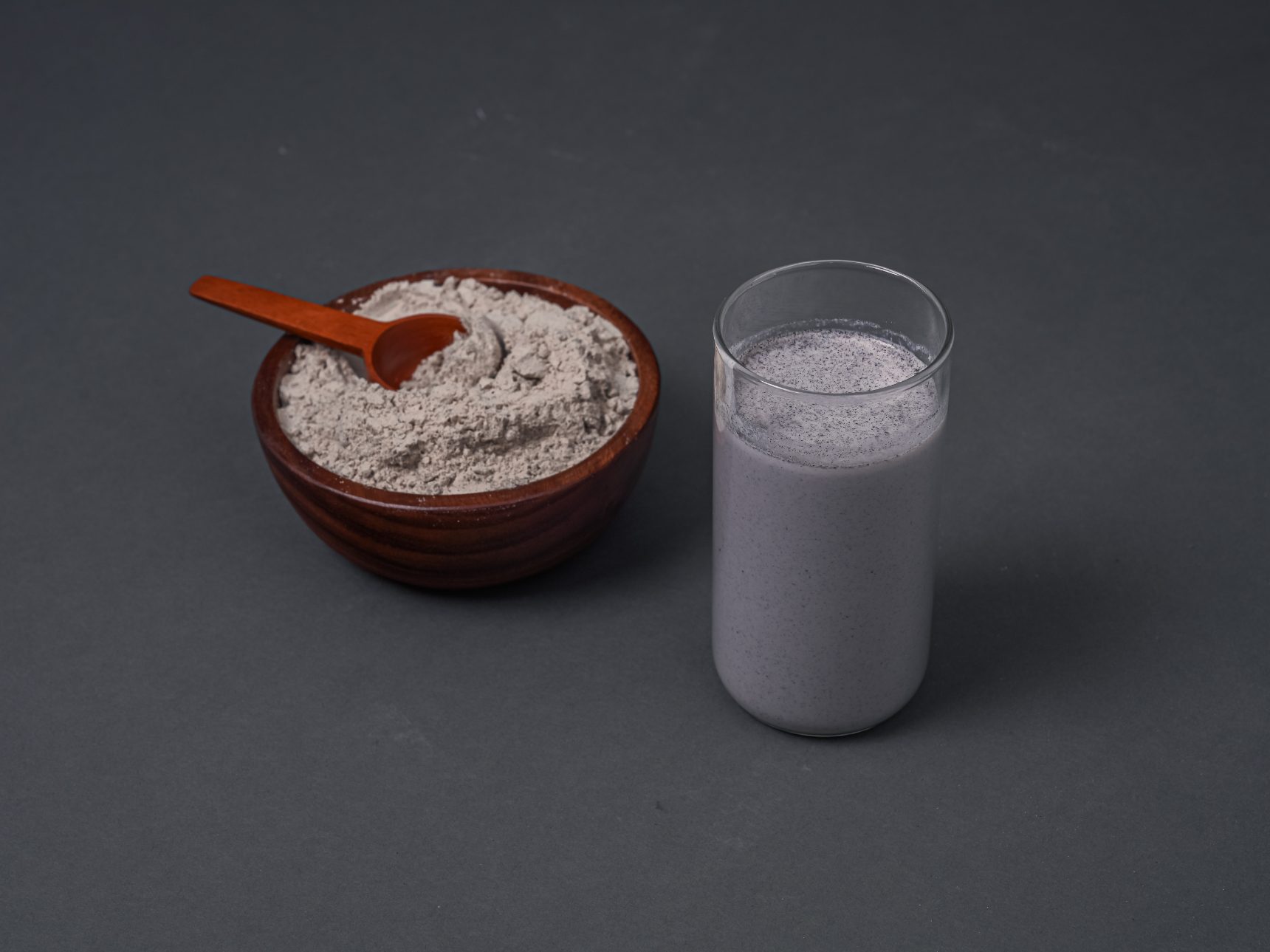
Black bean mixed grain powder in a wooden bowl beside a glass of the powder mixed with milk

The powder as it comes, and one pouch shaken with 200 ml of milk.

Unscrew the cap

40 g inside, already measured. No cup, no spoon.

Pour milk into the pouch

200 ml. Milk gives a fuller body. Water works too.

Close the cap and shake

Twenty seconds is enough.

Drink from the pouch

Best cold. Chill the milk beforehand.

Breakfast you can carry

A pouch in a bag and a carton of milk at the station covers a morning with no preparation at home.

After training

Around 7 g of protein per pouch from beans and grains, taken as a drink rather than a supplement.

An introduction to Korean grains

For anyone curious about misugaru, a single pouch is a lower commitment than a 700 g pouch.

Certification and award

Certification
HACCP

Certified for grain processed products. Korean food safety management certification issued by the Ministry of Food and Drug Safety.

FSSC 22000

Food safety system certification recognised by the Global Food Safety Initiative, held at plant level.

US FDA food facility registration

Our plant is registered as a food facility with the US Food and Drug Administration. Registration is a filing requirement for food shipped to the United States and does not constitute FDA approval or endorsement of the product.

2026 RICE SHOW

Selected as an Outstanding Product in the balanced nutrition category. Organised by the Korea Rice Food Products Association.

Who makes it

Manufacturer

This is not a contract-branded product. We manufacture it ourselves.

Since 1983

Founded in Daegu as Yudong Food, moved to the current plant in Seongju in 1998.

Own plant, no outsourcing

Intake, sorting, roasting, milling, blending, metal detection and packing all run in house.

Also an ingredient supplier

The same lines supply soybean and grain powders to food manufacturers, with OEM and ODM production available.

Frequently asked questions

FAQ

What is the difference between this and the 700 g pouch?

The blend is the same. This is the single-serve format: 40 g spout pouches, pre-measured, 40 per carton. The 700 g pouch is the same powder in a larger pouch, for households that drink it regularly and prefer to measure themselves.

Does it contain allergens?

Yes. It contains wheat (from the wheat starch in the sugar blend) and soybean. It is also made in a facility that handles sesame and peanut products.

Can I drink it with water instead of milk?

Yes. Water gives a lighter drink and lets the black bean character come through more directly. Milk gives a fuller, creamier result. Soy milk and oat milk both work as well.

Is the sugar necessary?

It is there to make the powder drinkable for most people. Roasted grain powder without any sweetening is quite austere. One pouch contains around 4 g of sugar. If you prefer to control sweetness yourself, our unsweetened roasted soybean powders can be sweetened to taste.

Where are the ingredients from?

All six grains and beans are grown in Korea, including the seoritae black soybean that makes up 44% of the blend. Sugar is the only ingredient not of Korean origin.

Do you supply this for export or private label?

Yes. We export to the United States, Canada, Australia, Hong Kong and China, and we produce under OEM and ODM arrangements. Please send an enquiry with the quantity and specification you need.

Specification

Product data
Product nameBlack bean mixed grain powder (GOSOSO)
Product typeGrain processed product
Net weight40 g (1.41 oz) per spout pouch
IngredientsBlack bean (seoritae, Korea) 44%, black rice (Korea), soybean (Korea), barley (Korea), rice (Korea), glutinous rice (Korea), sugar (sugar, starch)
AllergenContains wheat and soybean
StorageStore in a cool, dry place away from direct sunlight. Keep sealed after opening.
ManufacturerSamjin food, 31 Yongjeonggongdan-gil, Yongam-myeon, Seongju-gun, Gyeongsangbuk-do, Republic of Korea
Country of originRepublic of Korea

ALLERGEN INFORMATION — Contains wheat and soybean. Made in a facility that also processes sesame and peanut.

Also available in 700 g

The same blend in a resealable pouch, for households that drink it regularly.